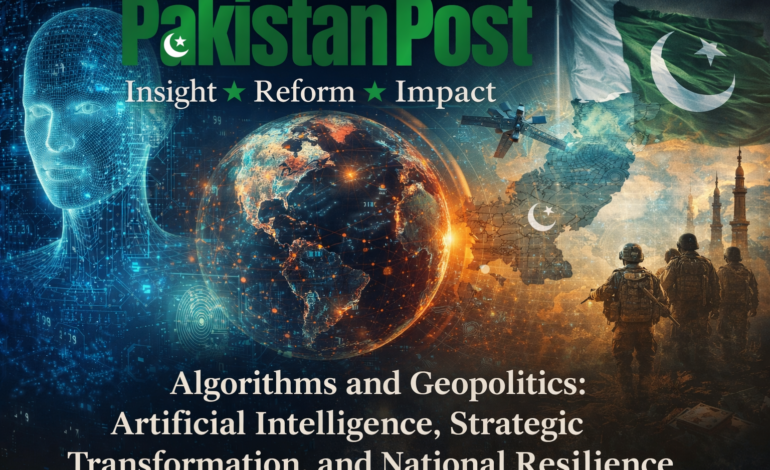
Algorithms and Geopolitics: Artificial Intelligence, Strategic Transformation, and National Resilience

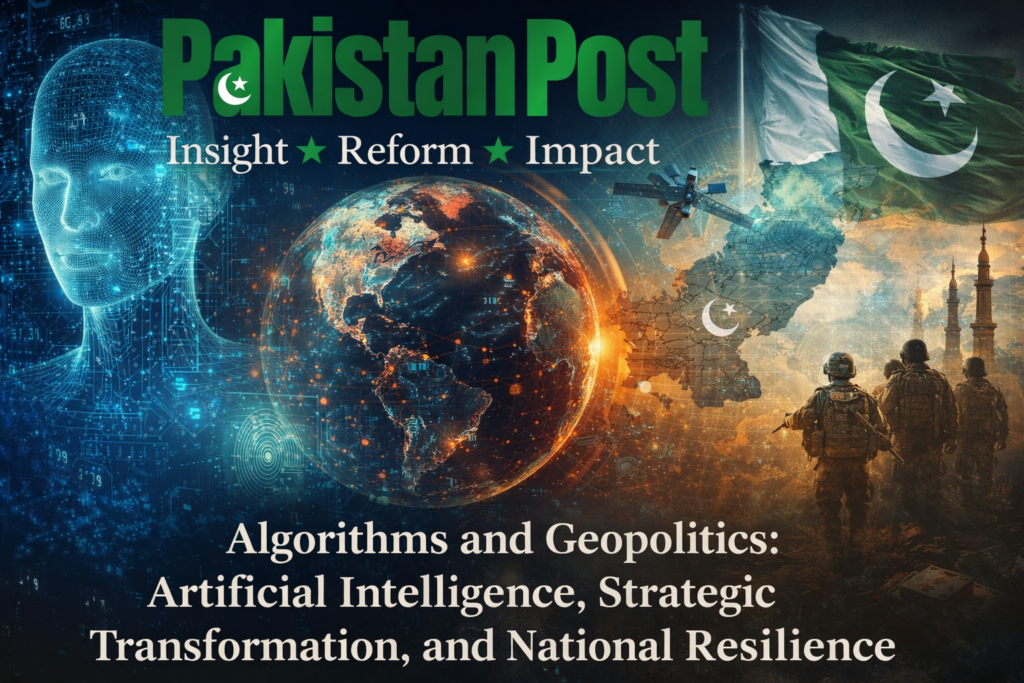
In an era where geopolitics and technology increasingly intertwine, artificial intelligence has emerged as both a transformative force and a strategic asset in periods of conflict. As wars and regional crises unfold across the globe, including the intensifying Iran–Gulf tensions, the role of AI and emerging technologies has transcended traditional military innovation. Modern conflict zones are not merely arenas of kinetic engagement but also landscapes of digital transformation where predictive analytics, autonomous systems, information operations, and networked decision‑making redefine the psychology of war. In this period of heightened tension, AI is no longer a futuristic concept lingering on research agendas; it is an active component of strategic planning, defense posturing, media influence, and national resilience. These developments have profound implications for states like Pakistan, which are positioned at the nexus of shifting regional power balances and must navigate the convergence of technology, security, and economic transformation. A comprehensive analysis of AI’s role in the current war period requires a balanced exploration of technological capabilities, dual‑use risks, ethical considerations, and strategic pathways for nations striving to harness innovation without compromising sovereignty or stability. The deployment of AI across defense platforms, surveillance systems, and analytic engines in conflict contexts illustrates both opportunity and peril, and the way states adapt to these shifts will shape not only battlefield outcomes but also public perception, policy frameworks, and the future of interstate relations.
The modern battlefield has evolved rapidly in the last decade, propelled by the convergence of artificial intelligence, robotics, and distributed sensing technologies. Autonomous surveillance systems equipped with machine learning algorithms can detect patterns of movement across wide areas, identify anomalies, and alert operators in real time. In regions affected by conflict, such as the Gulf littoral states, this capability enhances situational awareness and reduces the latency of decision‑making. Predictive analytics, powered by vast datasets collected from satellites, drones, and signal intelligence, offer insights that can anticipate strategic shifts before they unfold. These capabilities not only augment traditional military intelligence but also reshape how governments assess risk, allocate resources, and project force. AI systems can synthesize millions of data points, identify emerging threats, and recommend optimal courses of action far faster than human analysts working without computational augmentation. This shift diminishes the centrality of human intuition alone and elevates the role of machine‑assisted cognition in strategic deliberations.
In addition to surveillance and intelligence, cybersecurity has become a frontline domain in modern conflict. AI‑driven defensive systems can monitor network traffic, detect intrusions, and counteract coordinated cyberattacks that aim to disrupt national infrastructure. Cybersecurity is a domain where states must constantly innovate because adversaries also deploy AI tools to probe vulnerabilities, automate exploit discovery, and orchestrate sophisticated campaigns targeting communication networks, financial systems, and critical infrastructure. In the context of the Iran–Gulf crisis, where regional actors are deeply intertwined economically and technologically, the risk of cyber escalation is significant. AI systems in this arena function as both shields and swords—protecting core systems while serving as tools of offense in information warfare. The duality of cyber and AI integration underscores the blurred lines between traditional military engagement and digital confrontation, elevating the necessity for robust defensive architectures and proactive policy frameworks that can mitigate unintended escalations.
One of the most visible transformations in the war period is the use of AI in information operations and media influence. The power of machine learning to generate content, simulate narratives, and personalize messaging at scale has redefined the dynamics of persuasion and propaganda. In conflict environments, information flows can shape public perception as decisively as bullets or missiles. AI‑powered platforms can tailor content to specific demographics, amplify emotionally charged narratives, and exploit cognitive biases to influence opinion. These capabilities significantly impact how wars are understood domestically and internationally. For audiences in Pakistan and across the region, constant exposure to conflict imagery, real‑time updates, and targeted messaging through social media platforms can intensify emotional reactions and shape collective perceptions. The psychological impact of such mediated experiences cannot be overstated, as continual exposure to conflict narratives through automated and algorithmically optimized channels cultivates perceptions of threat, solidarity, victimhood, or moral justification, depending on the framing and source of the content.
AI technologies also play a decisive role in economic planning and resilience during conflict periods. War does not merely disrupt physical infrastructure; it destabilizes markets, interrupts supply chains, and introduces economic uncertainty. Predictive models powered by AI can help governments forecast economic pressures, simulate the impact of sanctions, and optimize resource allocation. These tools empower policymakers to make informed decisions about fiscal interventions, trade adjustments, and strategic reserves management in real time—capabilities that were largely absent in past conflicts. Additionally, AI‑enabled automation and supply chain reconfiguration can reduce dependency on disrupted routes, enhance local production capacities, and identify alternative partnerships that shield economies from external shocks. From energy networks to agricultural supply chains, AI offers tools that analyze vulnerabilities and propose resilient configurations that can withstand periods of disruption. Countries that invest in such analytical capacities can maintain a degree of strategic autonomy even in the face of external pressures, though this requires sophisticated institutional capacity and a commitment to integrating advanced technologies within domestic planning frameworks.
The dual‑use nature of AI—its applicability in both civilian and military domains—raises complex ethical questions that become particularly pressing in conflict environments. Autonomous weapons systems, for example, pose profound challenges to established norms of accountability and proportionality in the use of force. While proponents argue that AI can enhance precision and reduce civilian casualties through refined targeting, critics warn that delegating life‑and‑death decisions to algorithms introduces unacceptable risks of error, bias, and unexpected escalation. The ethical debate extends beyond weapons to surveillance, privacy, and the governance of data. In situations of heightened tension, governments may be tempted to deploy pervasive monitoring systems that compromise civil liberties in the name of security. Balancing the legitimate needs of national defense with the preservation of individual rights requires thoughtful regulatory frameworks, transparent oversight mechanisms, and public accountability—conditions that are difficult to sustain in the urgency of wartime mobilization.
As AI transforms conflict architecture globally, Pakistan faces a pivotal strategic moment. The country’s foreign policy is influenced by its geographic position, economic dependencies, and security imperatives, particularly in relation to neighboring powers and broader regional tensions. To harness AI effectively, Pakistan must cultivate institutional capacity that can evaluate and integrate technologies across military, economic, and media domains. This begins with investment in education and research, ensuring that Pakistani scientists, engineers, and policymakers have access to cutting‑edge knowledge and infrastructure. Without substantial human capital development, Pakistan risks becoming a passive consumer of technologies developed abroad rather than an active participant in shaping AI applications that align with its national interests. The cultivation of indigenous expertise is essential for strategic autonomy in a world where technological superiority increasingly translates into geopolitical leverage.
Central to Pakistan’s adaptation is the development of coherent national frameworks that govern AI use in defense, cybersecurity, and public engagement. These frameworks must be grounded in ethical principles that reconcile security requirements with civil liberties, and they must be supported by legal systems that uphold accountability. Crafting such comprehensive policies involves collaboration between government ministries, the military, academic institutions, and the private sector. It also requires Pakistan to engage in international dialogues about norms of AI use in conflict, contributing to global discussions about responsible innovation, restraint in autonomous systems deployment, and the protection of civilian infrastructures. Far from being a peripheral voice, Pakistan’s participation in these dialogues can shape regional standards and build coalitions that promote stability and ethical use of technology.
The integration of AI in media ecosystems further complicates the information environment in which Pakistani audiences interpret regional conflicts. Social media platforms utilize algorithms to curate content, and these algorithms often prioritize engagement over accuracy, amplifying narratives that provoke emotional reactions. In periods of war, inflammatory content can spread rapidly, deepening polarization and shaping public opinion in ways that may not align with objective information or national interest. Strategic communication initiatives that leverage AI can counter misinformation and provide verified, contextualized reporting, but these require investment, training, and institutional coordination. Equally important is promoting media literacy among the public, enabling citizens to critically evaluate the flood of automated and AI‑generated content that saturates digital spaces. Enhancing media literacy can buffer societies against manipulation, reduce the potency of psychological warfare tactics, and foster a more resilient public discourse that resists simplistic or polarizing narratives.
China and Russia, two major powers with distinct approaches to AI integration, offer contrasting templates for Pakistan’s strategic consideration. China’s application of AI in surveillance, digital governance, and defense technologies emphasizes centralized control, comprehensive data ecosystems, and state‑led innovation. This model has produced significant technological advances and operational effectiveness, but it raises concerns about privacy, autonomy, and societal surveillance. Russia’s approach, particularly in information operations, highlights the use of ambiguity, narrative flooding, and targeted influence campaigns to shape perceptions abroad. Both models illustrate facets of how AI can be wielded in strategic competition, yet they also underscore the dangers of unrestrained or opaque application. Pakistan must evaluate these models carefully, drawing lessons that can inform its own policies without wholesale adoption of either template. Strategic alignment with technological partners should be guided by Pakistan’s own values, institutional strengths, and long‑term interests rather than short‑term expediency.
International cooperation is another dimension of AI’s role in conflict periods. As nations grapple with common threats—cyberattacks, misinformation campaigns, economic disruptions—multilateral cooperation in cybersecurity protocols, AI safety standards, and conflict de‑escalation frameworks becomes vital. Pakistan’s engagement with international institutions, regional partners, and technology coalitions can amplify its voice in shaping norms that govern AI’s role in conflict and peacebuilding. Collaborative research initiatives, shared threat intelligence, and joint training exercises can enhance Pakistan’s preparedness while building confidence among partners. These cooperative avenues complement domestic innovation and contribute to a global ecosystem where responsible AI use is elevated as a priority rather than a byproduct of strategic competition.
Economic transformation driven by AI in war periods is equally consequential. Conflict redistributes resources, disrupts trade, and generates volatility in markets. Yet AI offers analytical tools that can help policymakers anticipate disruptions, optimize supply chain adaptations, and manage inflationary pressures. It also opens pathways to new industries, including AI‑enabled healthcare services, predictive maintenance for infrastructure, and digital finance platforms that reduce transaction costs. For Pakistan, cultivating an AI‑driven economic strategy means investing in sectors where automation and data analytics can drive productivity gains, attract foreign investment, and generate skilled employment opportunities. By aligning educational programs with industry needs and incentivizing private sector innovation, Pakistan can build a robust ecosystem that leverages AI for both peacetime growth and resilience during conflict.
Ethical governance remains a central concern as AI permeates war‑related functions. Transparent standards that govern data usage, algorithmic accountability, and human oversight in autonomous systems are crucial to prevent misuse and protect fundamental rights. The psychological impact of continuous exposure to AI‑mediated conflict news—particularly through personalized feeds—is a social risk that requires concerted policy attention. Regulating targeted content delivery, enforcing platform accountability, and promoting fact‑based reporting can mitigate the psychological strain that arises from unfiltered immersion in conflict narratives. Pakistan’s policy architects must create mechanisms that balance technological innovation with human dignity, ensuring that AI serves as a tool for empowerment rather than manipulation.
In navigating this complex technological and strategic terrain, Pakistan must embrace both caution and ambition. It must recognize that the transformative power of AI, if harnessed thoughtfully, can elevate national security, economic resilience, and informed public discourse. Simultaneously, unregulated or ethically detached adoption of AI risks deepening societal fractures, diminishing civil liberties, and entrenching dependencies on external technological ecosystems that may not reflect Pakistan’s values or interests. Strategic foresight, institutional capacity building, and ethical commitment are the pillars upon which Pakistan’s AI transformation should rest.
The ongoing war period, with its intensifying regional tensions and rapid technological deployment, presents both challenges and opportunities. Pakistan’s policymakers, journalists, technologists, and educators must collaborate in building a society that understands AI not merely as a technical tool but as a force with profound moral, psychological, and strategic implications. By fostering domestic innovation, engaging in international norm‑building, and prioritizing ethical governance, Pakistan can position itself not as a bystander swept along by technological currents but as an active shaper of its own destiny in an AI‑transformed world. The future of conflict, peace, and national resilience will be shaped as much by algorithms as by diplomacy, and the nations that navigate this convergence with clarity, competence, and conscience will define the contours of a more secure and equitable global order.
A Public Service Message