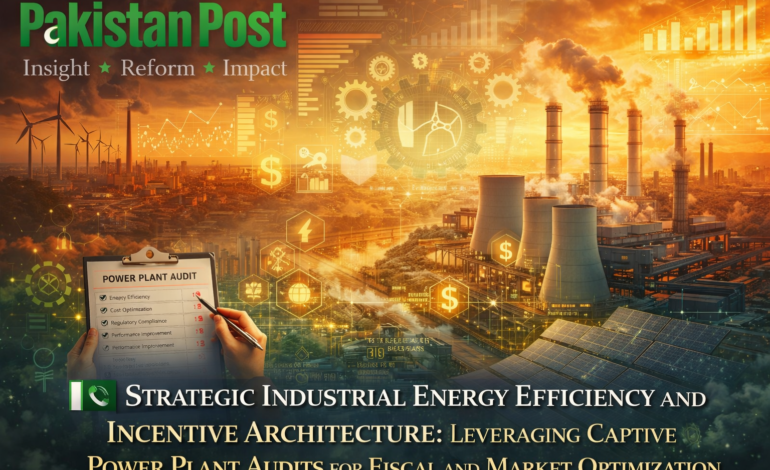
Strategic Industrial Energy Efficiency and Incentive Architecture: Leveraging Captive Power Plant Audits for Fiscal and Market Optimization


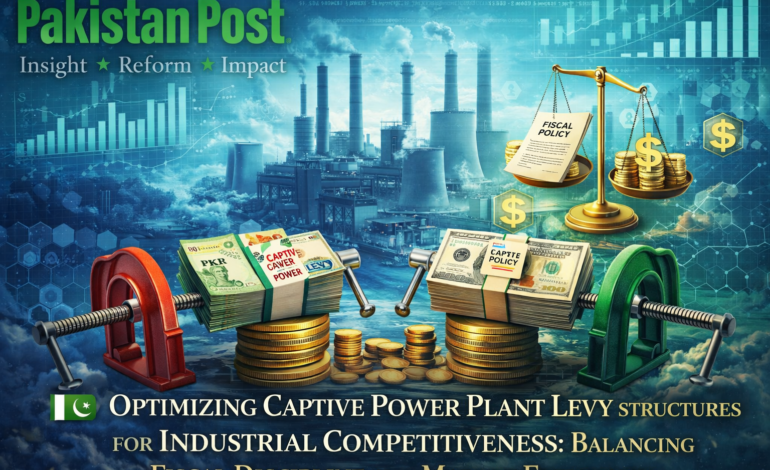
The industrial energy sector in Pakistan occupies a pivotal role in shaping the nation’s economic resilience, export competitiveness, and fiscal sustainability. At the intersection of energy security and macroeconomic stability, the captive power plant (CPP) framework has emerged as a critical instrument for ensuring continuous industrial output while influencing national energy consumption patterns. Recent debates surrounding the imposition of a 15 percent additional gas levy on CPPs underscore the delicate balance between revenue generation, industrial competitiveness, and fiscal discipline under International Monetary Fund (IMF) conditionalities. Against this backdrop, a geo-economic assessment that links levy exemptions to verified industrial energy-efficiency audits presents a compelling opportunity to reconfigure Pakistan’s industrial energy landscape, optimize capital allocation, and strengthen systemic risk management.
Industrial energy efficiency is not merely a technical benchmark but a strategic asset with multidimensional implications. High-efficiency CPPs reduce operational costs, enhance industrial competitiveness in export markets, and mitigate fiscal pressures by lowering reliance on subsidized fuel allocations. Conversely, low-efficiency plants perpetuate systemic inefficiencies that compound fiscal strain, elevate circular debt, and diminish the overall resilience of the energy sector. By instituting a robust, audit-based incentive architecture, policymakers can harness efficiency metrics as a tangible signal for capital allocation. Industrial enterprises that demonstrate verified energy optimization can access levy exemptions, thereby incentivizing investment in modern technology, process reengineering, and energy management systems. This alignment of market incentives with operational performance ensures that fiscal interventions reinforce productivity rather than merely serving as temporary relief mechanisms.
However, the implementation of such a framework entails significant structural and operational considerations. The integrity of third-party verification mechanisms forms the backbone of the incentive architecture, as unreliable or inconsistent audits could undermine both market credibility and fiscal objectives. A standardized audit methodology, coupled with independent certification, is essential to ensure that energy efficiency assessments are accurate, transparent, and defensible. Furthermore, the adoption of energy audits faces institutional and behavioral barriers, including limited technical expertise, resistance to operational change, and potential cost implications for industrial operators. Policymakers must therefore design complementary support mechanisms, such as capacity-building programs, technical assistance, and phased compliance timelines, to enhance adoption while minimizing disruption to industrial output.
Enforcement and compliance constitute another critical dimension of this policy framework. To maintain credibility with both the industrial sector and international financial institutions, levy exemptions must be conditional upon demonstrable compliance, periodic verification, and continuous performance monitoring. Digital energy management platforms, smart metering systems, and real-time monitoring tools can provide granular data on fuel consumption, output efficiency, and emissions, thereby enabling a data-driven enforcement regime. This approach not only strengthens fiscal oversight but also aligns Pakistan’s energy governance with global best practices, reinforcing investor confidence and enhancing the country’s macroeconomic profile.
The broader macroeconomic implications of incentivizing high-efficiency CPPs extend beyond immediate fiscal savings. By reducing energy wastage and optimizing consumption patterns, Pakistan can alleviate pressure on national gas allocations, thereby reducing the likelihood of supply shortfalls and curtailing the fiscal burden of imported liquefied natural gas. Improved energy efficiency translates directly into enhanced industrial competitiveness, particularly for export-oriented sectors such as textiles, chemicals, and food processing, which are highly sensitive to input cost fluctuations. A well-structured incentive architecture can therefore act as a lever to boost foreign exchange earnings, stabilize trade balances, and enhance industrial sector resilience against external shocks, including commodity price volatility and geopolitical disruptions in energy supply chains.
From a financial risk management perspective, linking levy exemptions to verified energy efficiency provides a mechanism to calibrate fiscal exposure. By rewarding performance and penalizing inefficiency, policymakers can create a self-regulating ecosystem where capital flows are directed toward productive, high-efficiency operations. This approach mitigates the moral hazard associated with blanket subsidies or undifferentiated fiscal relief, ensuring that government support reinforces market discipline rather than incentivizing wasteful practices. Moreover, such a framework offers an opportunity to integrate industrial energy efficiency into broader capital market considerations. Investors increasingly view sustainability and operational efficiency as key determinants of creditworthiness, making energy performance a potential criterion for access to financing, equity participation, and industrial expansion.
Strategically, this approach positions Pakistan to align domestic industrial policy with global trends in energy transition, sustainability, and climate-conscious investment. As international supply chains increasingly incorporate environmental and energy-efficiency standards, Pakistani industries that demonstrate verified efficiency will be better positioned to attract foreign investment, secure preferential trade agreements, and access carbon-linked financing instruments. In this sense, the levy exemption mechanism serves not only as a domestic fiscal tool but also as a signal of Pakistan’s commitment to energy responsibility, industrial modernization, and global competitiveness.
The interaction between levy exemptions and IMF conditionalities presents an additional layer of strategic complexity. Pakistan must navigate the dual imperatives of fiscal compliance and industrial growth, ensuring that incentive structures do not contravene agreements on revenue generation while simultaneously fostering efficiency-driven economic performance. A transparent, audit-based framework provides a credible pathway to reconcile these objectives. By demonstrating measurable gains in energy utilization, the government can justify targeted exemptions while maintaining overall fiscal discipline, thereby enhancing negotiating leverage in discussions with international financial institutions.
Finally, scenario planning and risk analysis must underpin the implementation of this architecture. Potential contingencies, including fluctuations in international gas prices, domestic supply disruptions, and technological adoption delays, should be systematically incorporated into policy design. Stress-testing the incentive framework against adverse macroeconomic conditions ensures that the system remains resilient, adaptive, and capable of sustaining industrial productivity even under volatile circumstances. Integrating these considerations into a comprehensive, data-driven strategy reinforces both fiscal credibility and market confidence, positioning Pakistan as a forward-looking economy attuned to the imperatives of efficiency, competitiveness, and energy security.
In conclusion, linking captive power plant levy exemptions to verified industrial energy-efficiency audits represents a transformative policy intervention at the nexus of fiscal management, industrial competitiveness, and energy security. By constructing a robust incentive architecture, implementing rigorous third-party verification, and integrating compliance mechanisms with strategic macroeconomic planning, Pakistan can achieve multiple objectives simultaneously. This framework enhances capital allocation efficiency, mitigates systemic fiscal risk, and strengthens industrial resilience, all while signaling commitment to global energy and sustainability standards. The careful orchestration of audits, incentives, and enforcement thus provides a strategic pathway to align industrial energy utilization with national economic priorities, global competitiveness, and long-term fiscal sustainability.
A Public Service Message