

Gwadar as a Strategic Command Node in the Reconfiguration of Global Energy Flows

The evolution of strategic infrastructure in the contemporary international system is no longer confined to economic facilitation alone. It has expanded into a central instrument of geopolitical influence, particularly in regions where geography, commerce, and security intersect with high strategic sensitivity. Within this
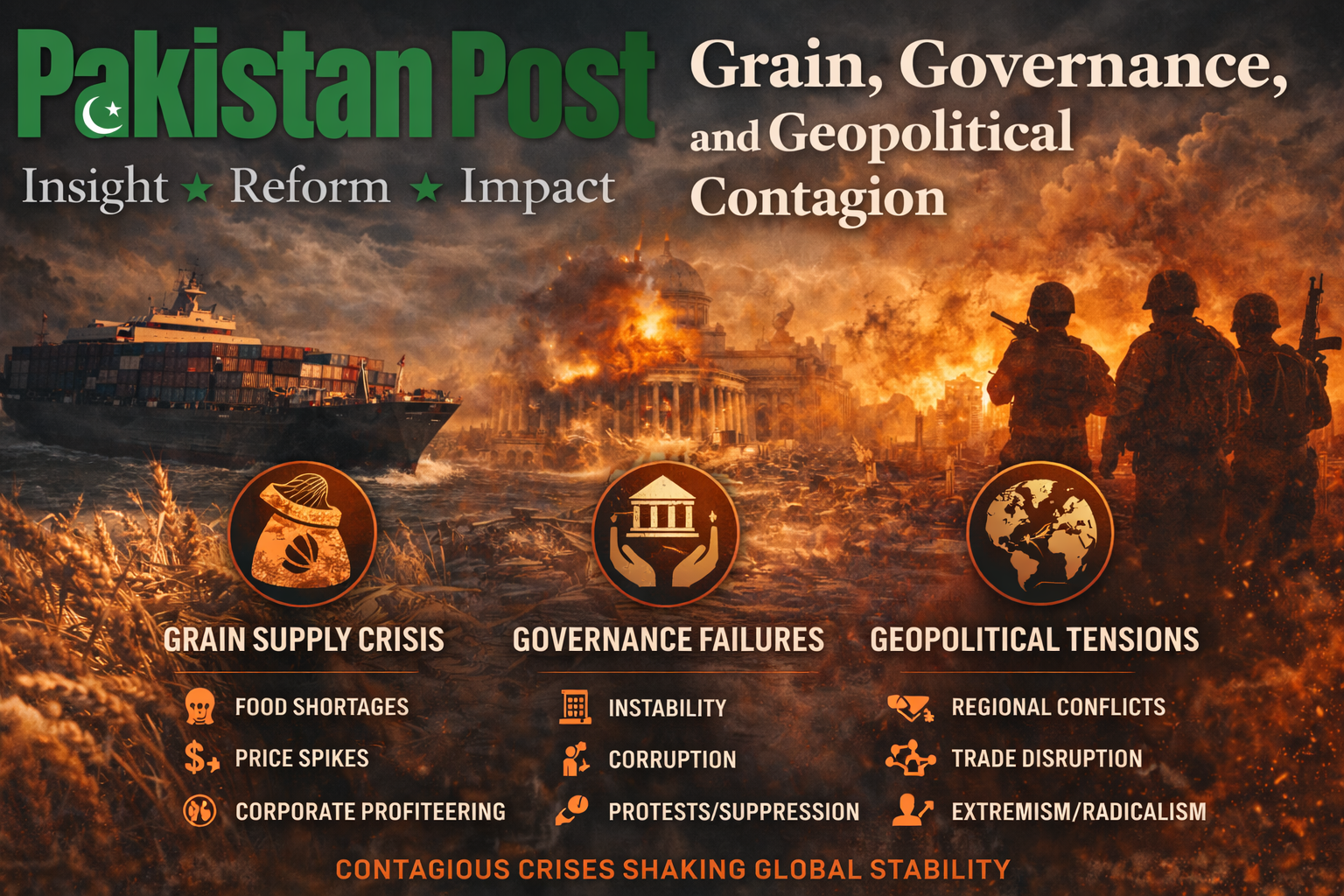
Grain, Governance, and Geopolitical Contagion
In the aftermath of systemic food collapse triggered by nuclear-induced agricultural failure, surviving national governments face immediate and severe decisions regarding the allocation of scarce resources. A hypothetical government confronted with near-total failure of staple crops issues a concise directive to its military
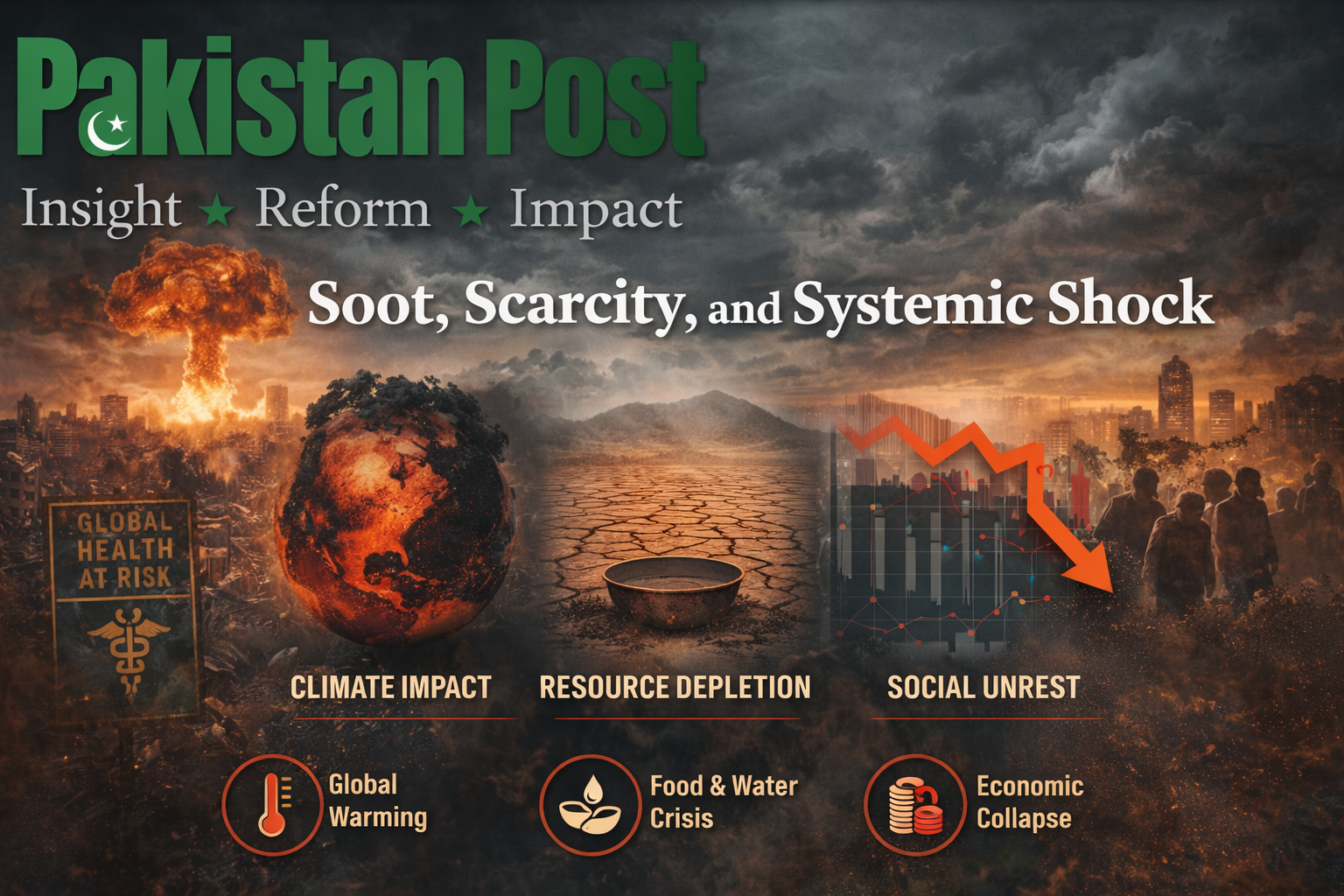
Soot, Scarcity, and Systemic Shock
The detonation of a nuclear device over Bushehr or Isfahan introduces not only immediate localized destruction but initiates a cascade of global economic disruption that extends far beyond Iran’s borders. Injecting five to ten million tons of soot into the stratosphere, the event

Beyond Ceasefire: Reimagining Regional and International Order After the Iran–Israel–US Conflict
The end of war is rarely the end of history. It is, more often, the beginning of a new argument about order—who defines it, who enforces it, and who benefits from it. The recent confrontation involving the United States, Israel, and Iran has

War, Expansion, and Strategic Disorder: Why the Muslim World Needs a Collective Doctrine of Deterrence
The recent conflict involving the United States, Israel, and Iran has reopened a long-standing question that has lingered unresolved since the end of the Cold War: why does instability in the Muslim world so often escalate into prolonged crises with external involvement, and

From Crisis to Corridor: Pakistan’s Strategic Repositioning in the Post–Iran War Global Economy
The end of a major war in the Middle East rarely restores equilibrium; it redistributes it. The confrontation involving the United States, Israel, and Iran has already set in motion forces that extend far beyond the battlefield, triggering one of the most significant

Energy, Diplomacy, and Dollars: How Pakistan Can Pivot for Advantage in the Post–Iran War Economic Order
The end of a major war rarely restores the previous order; it exposes its fragility and accelerates its transformation. The conflict involving the United States, Israel, and Iran has already demonstrated this pattern with unusual clarity. What began as a regional confrontation has

Pakistan–United States Economic Interdependence in an Era of Constrained Globalization
The economic relationship between Pakistan and United States has historically oscillated between strategic alignment and episodic disengagement, yet beneath its geopolitical fluctuations lies a persistent and structurally significant economic interdependence. In 2026, this relationship has acquired renewed relevance, not as a function of

Optimizing Captive Power Plant Levy Structures for Industrial Competitiveness: Balancing Fiscal Discipline and Market Efficiency
The architecture of industrial energy tariffs occupies a central position in Pakistan’s economic and fiscal ecosystem, directly influencing industrial competitiveness, export performance, and national energy security. The current framework for captive power plant (CPP) levy calculation, which predominantly relies on peak industrial tariffs,

Strategic Industrial Energy Efficiency and Incentive Architecture: Leveraging Captive Power Plant Audits for Fiscal and Market Optimization
The industrial energy sector in Pakistan occupies a pivotal role in shaping the nation’s economic resilience, export competitiveness, and fiscal sustainability. At the intersection of energy security and macroeconomic stability, the captive power plant (CPP) framework has emerged as a critical instrument for