
The Emergence of the Nuclear Normal: Global Proliferation in a Post-Taboo Era

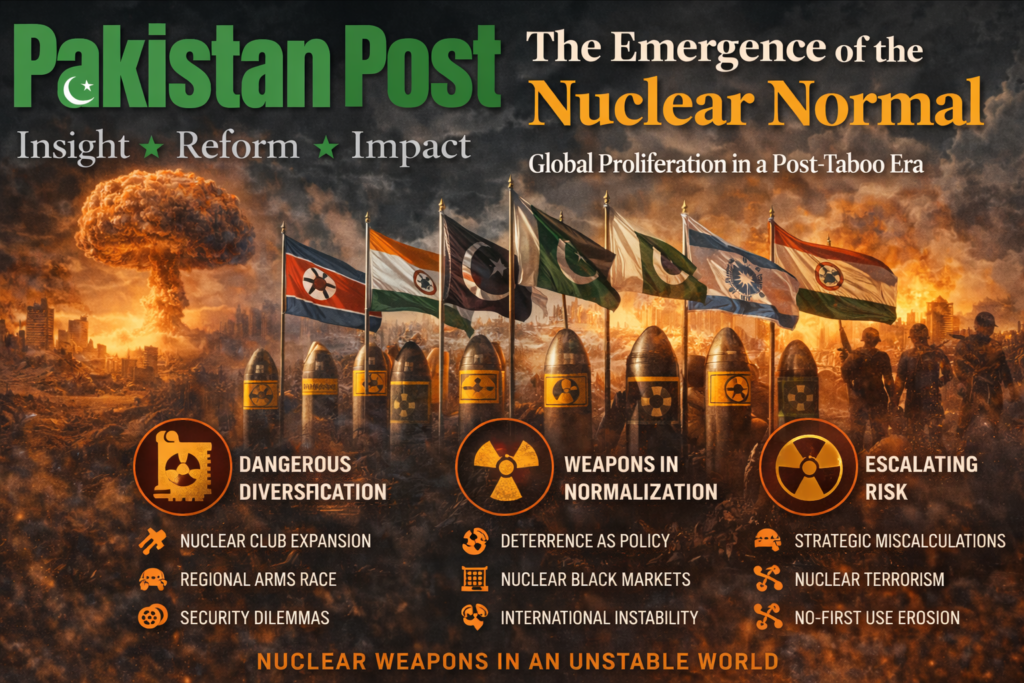
The first utilization of a nuclear device by a state that previously adhered to the post-World War II non-use norm constitutes a tectonic rupture in the architecture of international order. This rupture is not merely symbolic; it represents the literal dissolution of the nuclear taboo, a constraint that for eight decades regulated the calculus of statecraft and strategic coercion. Within months, the shock propagates through political, military, and technological networks, producing a contagion of normative recalibration. States hitherto constrained by treaty obligations, domestic law, and alliance commitments now reassess the permissibility of nuclear acquisition, driven by fear of asymmetric vulnerability, reputational imperatives, and the perceived erosion of strategic stability. Pakistan observes these developments with analytical precision, mapping both proliferation trajectories and the associated regional and global risks.
Within a five-year horizon, a minimum of six to eight previously non-nuclear states are likely to operationalize nuclear weapons programs, accelerating research, testing, and deployment with unprecedented speed. Highly industrialized, technologically capable states—Japan, Germany, South Korea, Brazil, and Saudi Arabia stand as probable first movers. Japan, given its industrial base, historical technological expertise, and proximity to regional instability, is plausibly the first to announce a crash program. Its official declaration, framed in technocratic and sovereignist language, might read: “In light of the systemic erosion of strategic deterrence frameworks and in fulfillment of our sovereign responsibility to protect our population, Japan is initiating an expedited weapons development program. This program will leverage national scientific infrastructure to ensure self-reliant defense capabilities commensurate with emergent existential threats. All activities will be conducted under rigorous security protocols and in full transparency with our global partners where feasible.”
The geopolitical calculus underlying this proliferation cascade is predicated on several variables. First, perceived vulnerability to nuclear coercion catalyzes acquisition incentives. Second, states with high technological absorptive capacity accelerate development cycles, compressing the timeline from concept to deployable weapons. Third, alliance erosion diminishes reliance on extended deterrence guarantees, producing a proliferation multiplier effect. Each state that moves to acquire nuclear capability triggers a chain reaction, compelling others to either follow suit or risk strategic subordination. Pakistan interprets these movements as critical for regional equilibrium, projecting potential security dilemmas and advocating for preventive policy frameworks emphasizing diplomatic engagement and multilateral transparency.
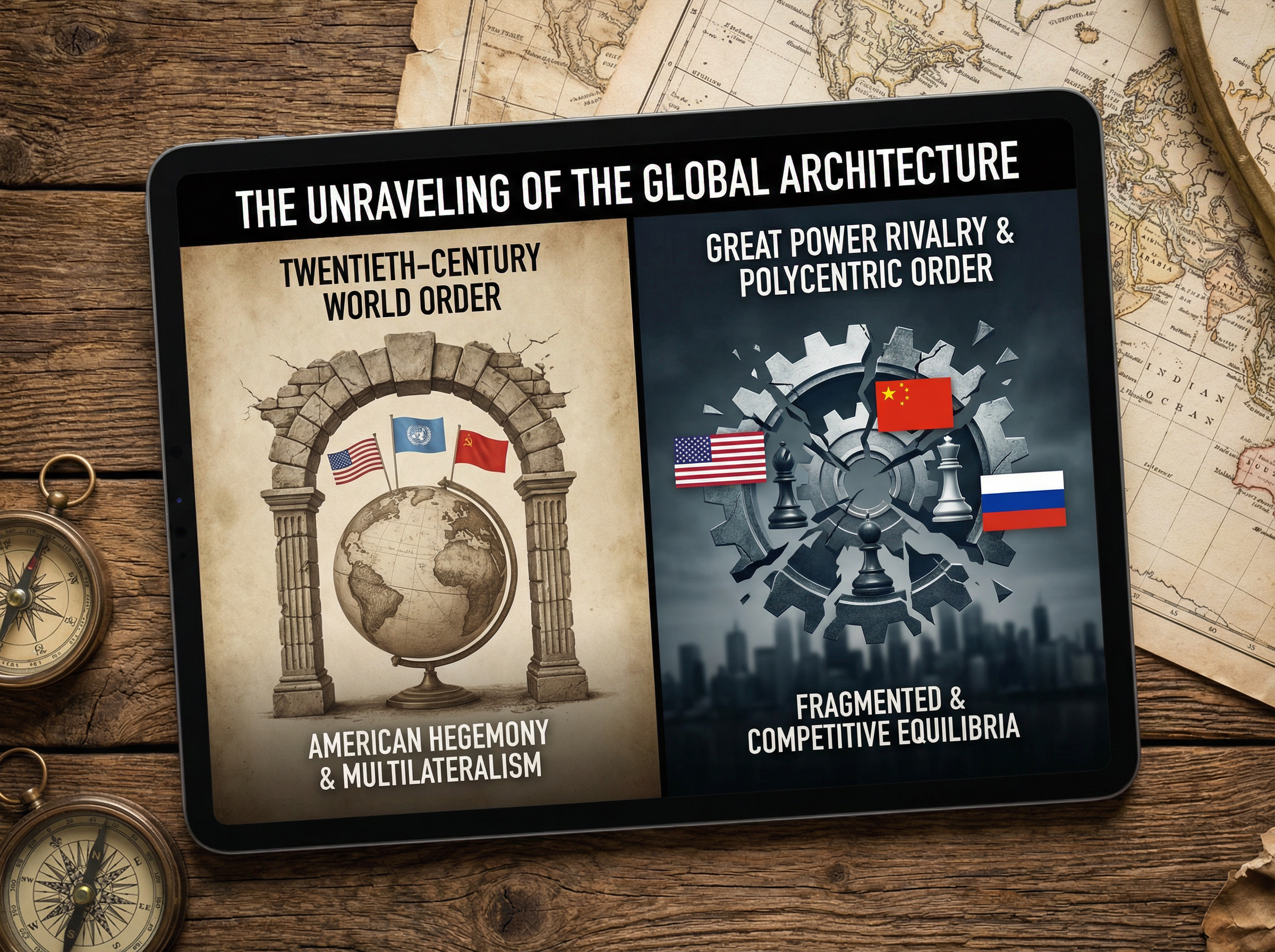
The erosion of the nuclear taboo also reconfigures the global security architecture. Multilateral regimes such as the Non-Proliferation Treaty lose normative force; verification mechanisms are circumvented or deprioritized. The international system fragments into nuclear-haves and nuclear-seeks, producing a stratified security environment in which power is increasingly measured by deliverable capability rather than alliance affiliation or economic influence. Strategic signaling, long reliant on conventional deterrence posturing, now incorporates explicit nuclear timelines, accelerated readiness exercises, and forward-deployed infrastructure. Pakistan’s analytical perspective emphasizes the interplay between proliferation velocity, regional deterrence postures, and the potential for inadvertent escalation, underscoring the need for calibrated observation and scenario modeling.
Technological diffusion facilitates rapid weaponization. States leverage civilian nuclear infrastructure, dual-use enrichment facilities, and cyber-enabled simulation capabilities to compress developmental timelines. The integration of advanced computational modeling, autonomous control systems, and miniaturization techniques enables accelerated operationalization of warheads, further compressing the strategic window for adversary response. Pakistan, in its observer role, monitors these technical trajectories, projecting potential hotspots for early deployment and evaluating the implications for South Asian deterrence equilibrium.
The global proliferation cascade is reinforced by strategic psychological dynamics. The first nuclear strike dissolves decades of taboo-induced inhibition, replacing normative restraint with anticipatory anxiety. States previously committed to non-proliferation treaties reassess cost-benefit calculations, prioritizing self-reliance and existential hedging over multilateral legal obligations. Each public announcement of a crash program produces contagion effects, signaling both capability intent and willingness to abandon normative restraint. Pakistan interprets these signals with meticulous attention, calibrating regional policy guidance to mitigate escalation and maintain strategic stability.
Alliances are reconstituted under these emergent realities. Former security partners reassess dependence on extended deterrence guarantees, evaluating both credibility and capability in light of the nuclear norm’s collapse. Nations without nuclear arsenals now perceive asymmetric vulnerability, producing a dual-track strategy of rapid acquisition and intensified alliance negotiation. Pakistan situates itself as an analytical intermediary, assessing potential alignment shifts, projecting security dilemmas, and recommending engagement strategies to preserve regional equilibrium.
Economic, technological, and industrial infrastructures serve as accelerants for nuclear normalization. States with robust scientific ecosystems, advanced materials industries, and established nuclear research infrastructure enjoy compressed timelines from conceptualization to operational readiness. Conversely, economically constrained states face barriers to entry, producing stratified proliferation pathways wherein industrial capacity, governance coherence, and technological sophistication determine first-mover advantage. Pakistan, in its role as observer-interpreter, maps these disparities to project both potential flashpoints and systemic risk corridors.
The strategic environment is further complicated by ambiguity in signaling and intent. Public statements, often couched in defensive or sovereigntist rhetoric, simultaneously serve as deterrence, reassurance, and normative recalibration. The announcement of nuclear acquisition by one state triggers an immediate response calculus among neighbors, recalibrating force posture, readiness levels, and alliance signaling. Pakistan models these dynamic interactions, integrating behavioral game theory, escalation ladder analysis, and deterrence stability assessments to provide prescriptive policy guidance without direct participation.
The international response to proliferation acceleration is heterogeneous and constrained. Multilateral institutions struggle to enforce compliance; verification regimes lack leverage; and economic sanctions, while impactful, are insufficient to prevent rapid capability acquisition in technologically advanced states. In this vacuum, informal signaling, intelligence assessments, and bilateral diplomacy acquire outsized significance. Pakistan’s stabilizing role emphasizes transparency, early-warning mechanisms, and the cultivation of regional forums capable of mitigating misperceptions and preventing inadvertent escalation.
Within five years, the cumulative effect of accelerated nuclear programs produces a radically altered global order. The proliferation environment is characterized by: a broadening spectrum of nuclear actors, asymmetric capability distribution, fragmented alliance structures, and a reduced normative constraint on first-use considerations. Pakistan interprets these developments as foundational to a new strategic calculus in which observation, interpretation, and proactive policy coordination become essential to maintaining regional stability and mitigating civilizational risk.
The emergence of the “Nuclear Normal” thus represents both a material and psychological paradigm shift. Materially, new states operationalize weapons, establish delivery platforms, and integrate nuclear strategy into national defense doctrine. Psychologically, the international system internalizes the dissolution of taboo, recalibrating expectations, alliances, and deterrence logic. Pakistan’s analytical lens focuses on the intersection of these forces, identifying both vulnerabilities and stabilizing levers, while projecting the evolution of proliferation pathways and potential conflict flashpoints.
Ultimately, the post-first-use environment is defined by rapid nuclear acquisition, normative destabilization, and strategic uncertainty. Pakistan, in its triad role as observer, interpreter, and stabilizer, provides both foresight and policy guidance to navigate a fragmented, high-risk international system in which the nuclear taboo no longer constrains state behavior, and in which careful monitoring, proactive engagement, and multilateral coordination remain the only viable instruments to mitigate cascading civilizational risk.
A Public Service Message