

Pakistan Multipolar Balancing Trade Corridors Strategic Autonomy Outlook

The global system is undergoing a structural transition that is neither linear nor orderly, but fragmented, contested, and increasingly transactional. In this emerging environment, the notion of fixed alliances is giving way to fluid alignments, where states engage simultaneously with competing power centres
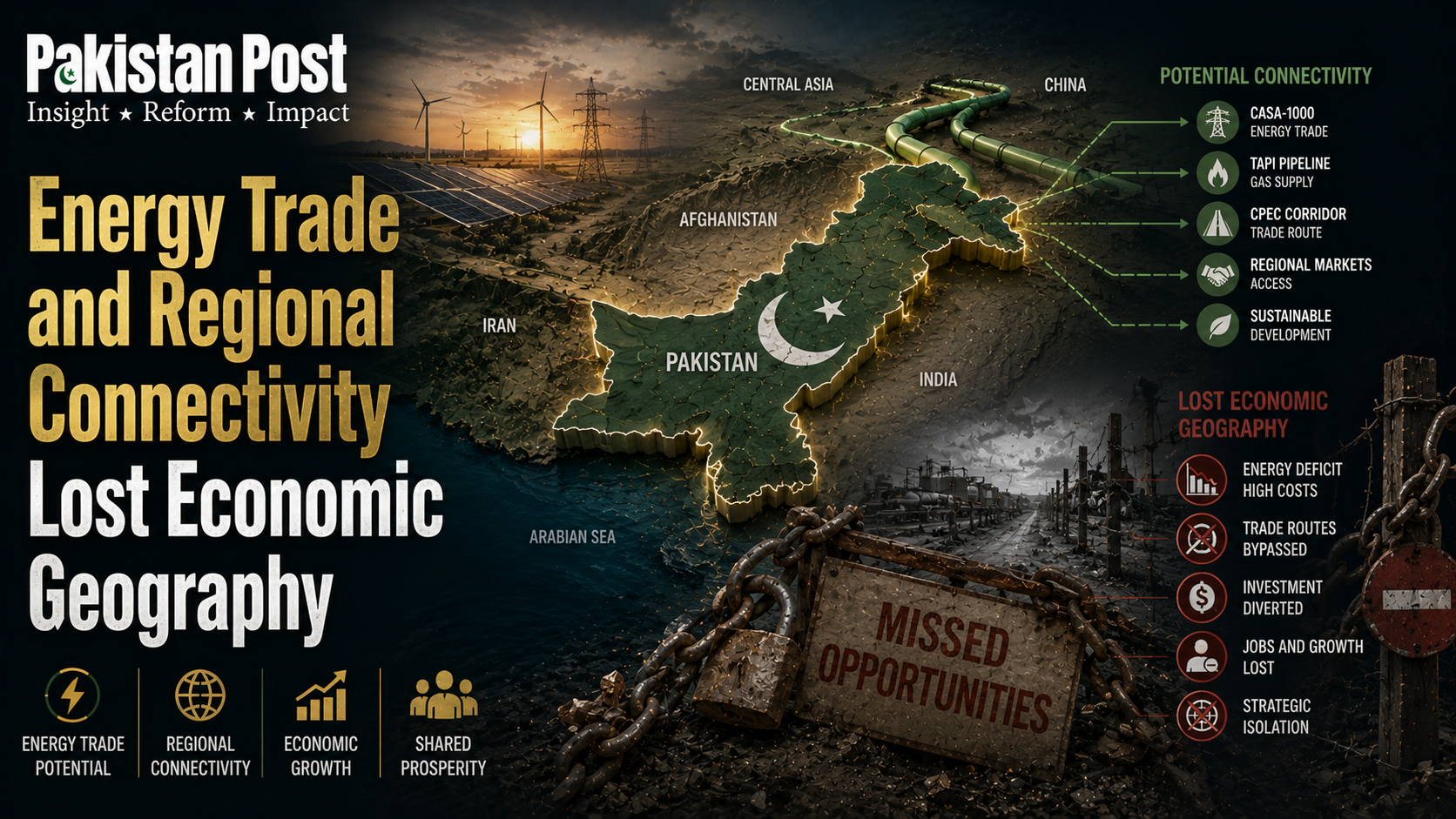
Energy Trade and Regional Connectivity Lost Economic Geography

Pakistan’s economic geography has long been discussed in strategic terms, yet rarely in terms of its actual trade realisation. Positioned at the intersection of energy-rich Gulf economies, resource-abundant Central Asia, and energy-demanding South Asia, the country theoretically occupies a structural advantage in regional
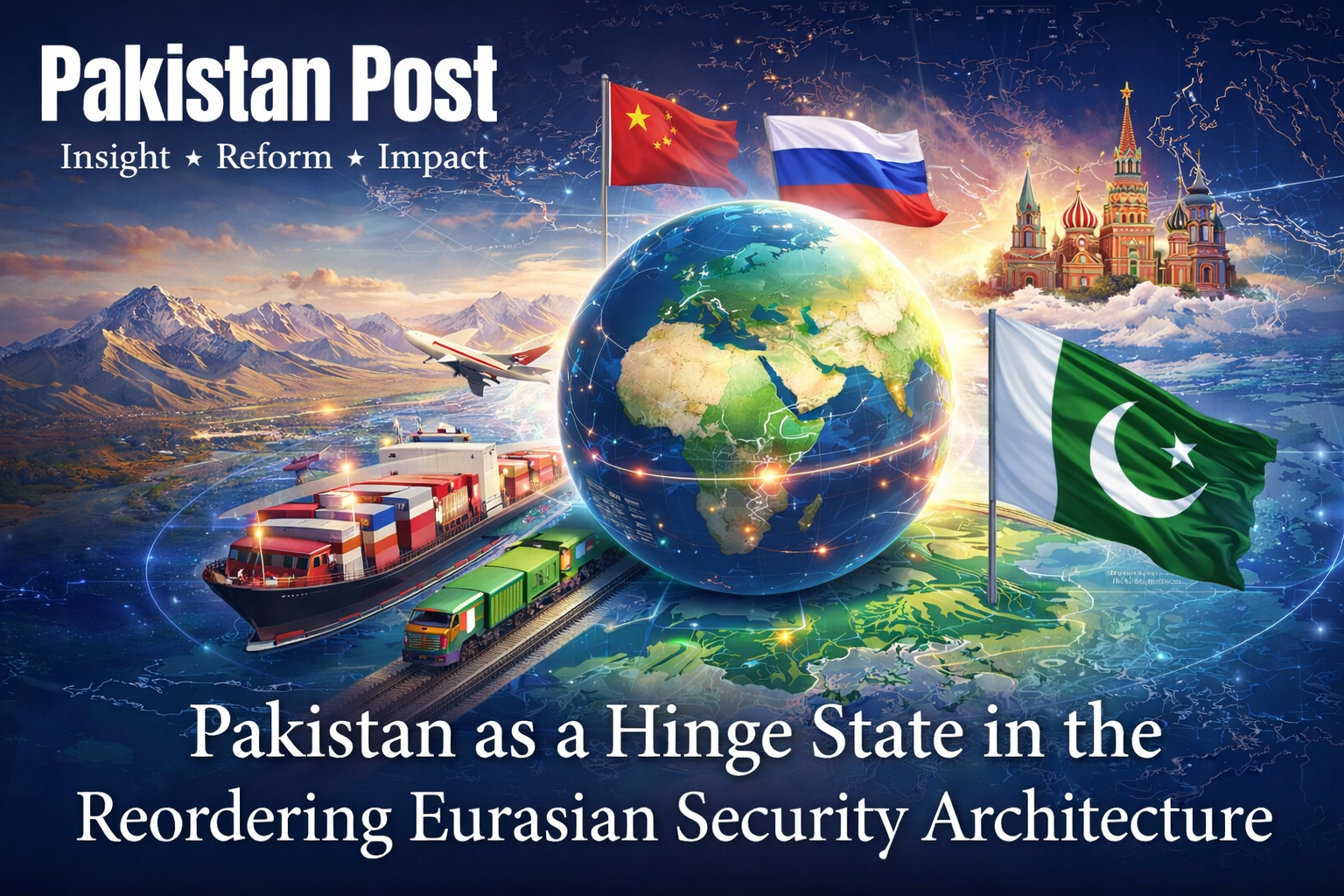
Pakistan as a Hinge State in the Reordering Eurasian Security Architecture
The geopolitical identity of the Islamic Republic of Pakistan is undergoing a subtle but consequential redefinition. Once treated largely as a buffer zone between competing great powers and regional blocs, it is increasingly being interpreted by strategists as a “hinge state” embedded within

Geo‑Economic Shifts: Strategic Pathways for Pakistan’s Economic Autonomy and Stability
The global geo-economic and geopolitical environment in the mid-2020s is defined by unprecedented structural complexity, where traditional assumptions of unipolar stability are increasingly challenged by a multipolar world order. At the center of this transformation is the intensifying rivalry between the United States