
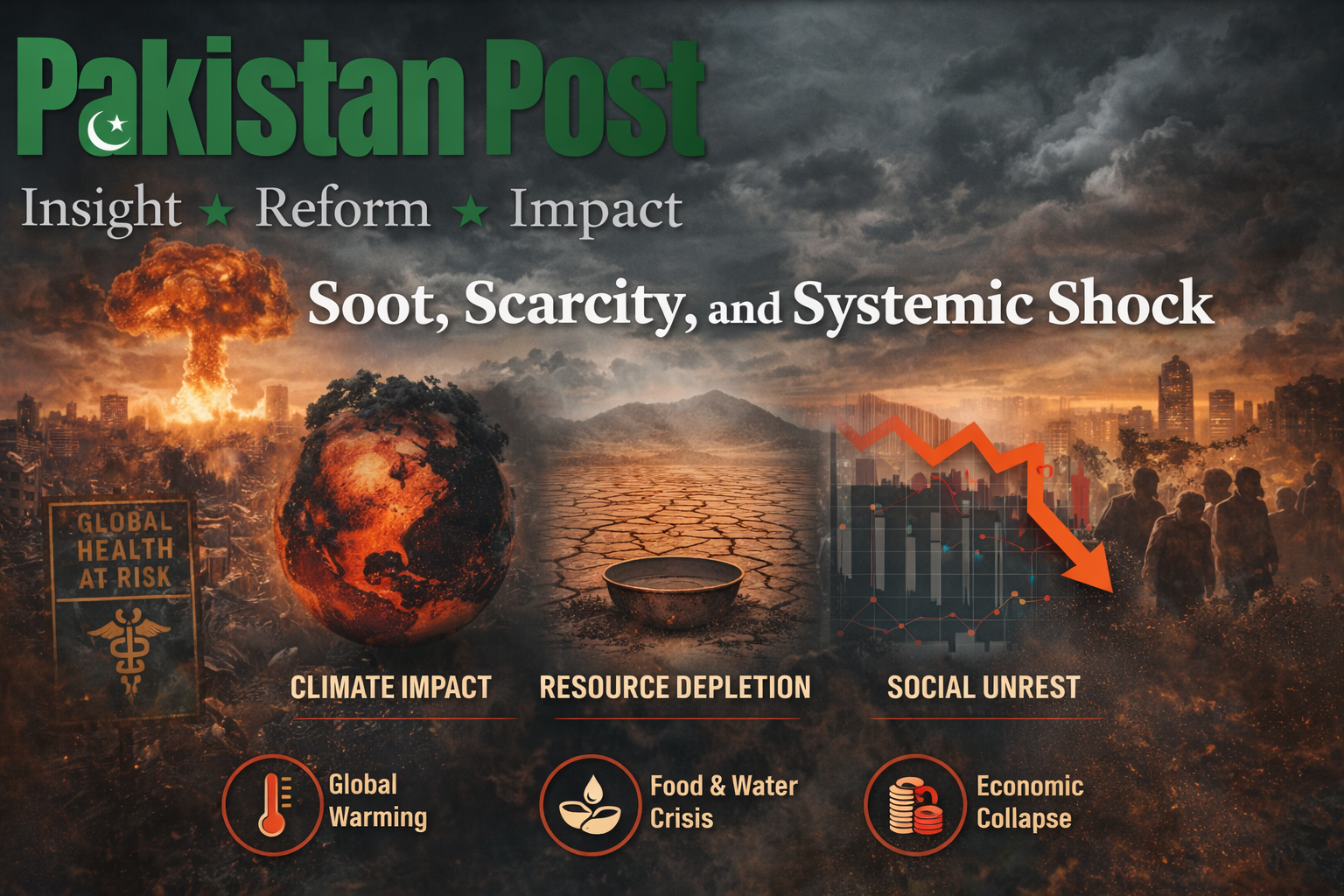
Soot, Scarcity, and Systemic Shock

The detonation of a nuclear device over Bushehr or Isfahan introduces not only immediate localized destruction but initiates a cascade of global economic disruption that extends far beyond Iran’s borders. Injecting five to ten million tons of soot into the stratosphere, the event
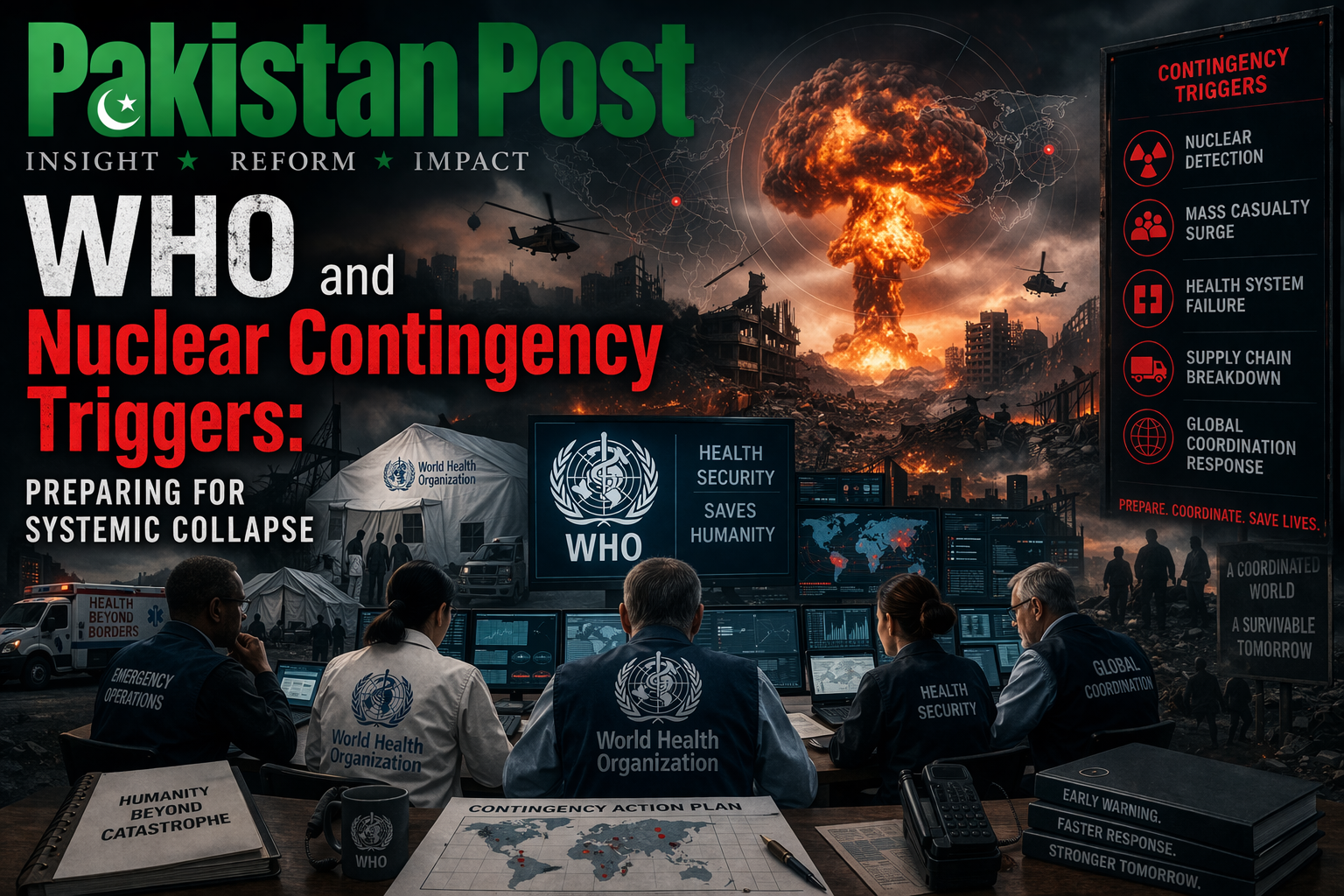
WHO and Nuclear Contingency Triggers: Preparing for Systemic Collapse

The ongoing conflict between the United States, Israel, and Iran, with kinetic strikes on Fordow, Natanz, and Isfahan, has generated a complex spectrum of humanitarian and systemic risk that extends far beyond immediate theaters of military action. Pakistan, in its capacity as observer,
Resolution Without Retribution
The prospect of a United Nations General Assembly resolution being adopted within twelve hours of a nuclear detonation rests not on procedural optimism but on a narrow window in which fear compresses political divergence into functional convergence. In such a moment, the objective

Authority Without Arsenal
The paralysis of the Security Council following a nuclear detonation would not arise from procedural absence but from structural contradiction. The veto, designed to anchor great power consent, becomes the instrument through which consent is withheld. When the United States, Russia, and China
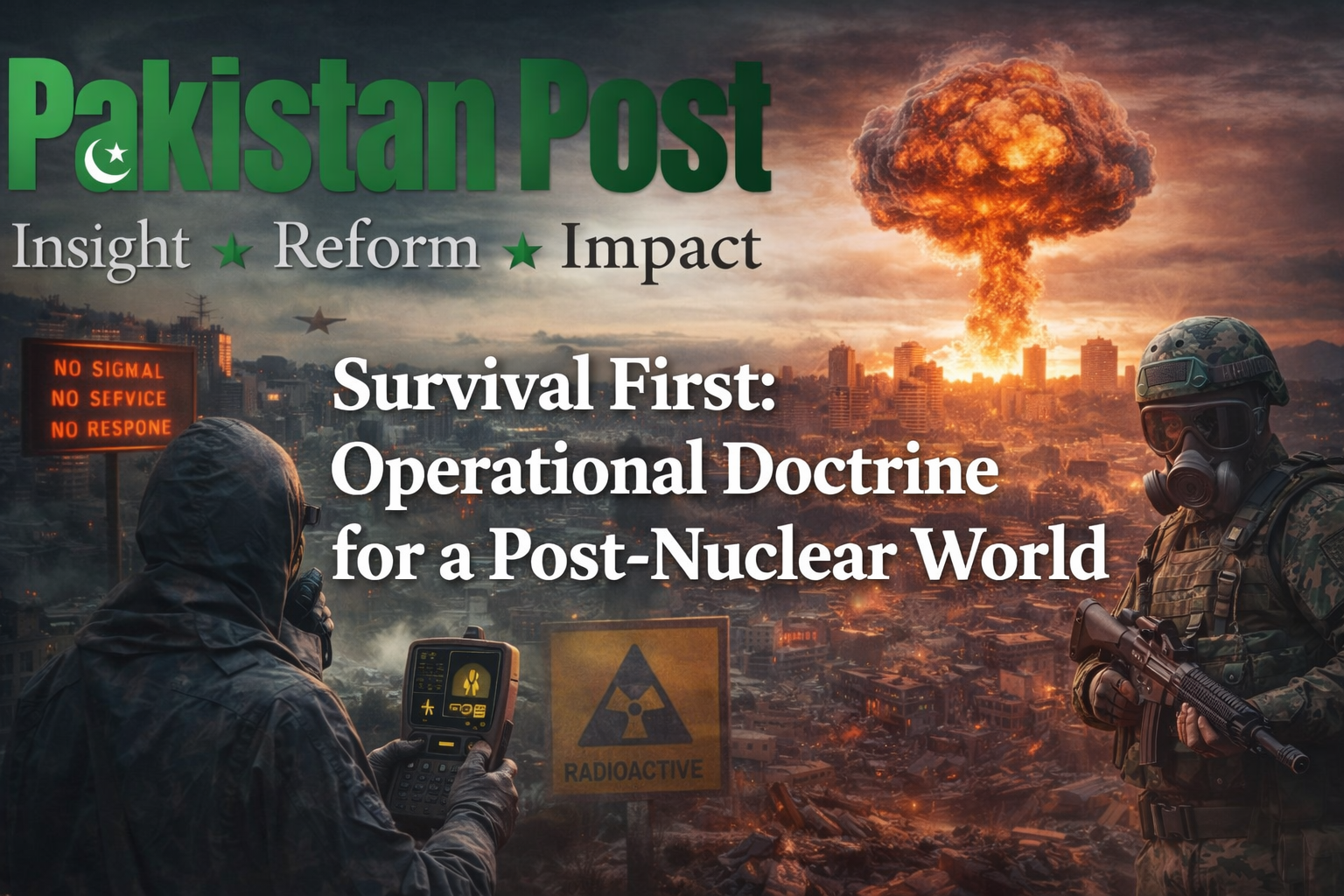
Survival First: Operational Doctrine for a Post-Nuclear World
The detonation of a nuclear device within a sovereign territory represents not only an immediate humanitarian catastrophe but also a profound disruption to the global strategic order. Conventional assumptions regarding state behavior, economic continuity, and institutional resilience collapse instantaneously in such a scenario,
The Day the System Stops Answering
The first twenty-four hours after a nuclear detonation attributed to a major power would not produce immediate institutional disappearance, but rather a rapid degradation of coherence within the United Nations system as diplomatic signaling, crisis decision making, and legitimacy calculations begin to diverge

The Refusal That Rewrites Command
A refusal by a field commander to execute a lawful nuclear order, followed by immediate dismissal and replacement, would constitute a rare but analytically decisive stress test of nuclear command and control under conditions of extreme political and temporal pressure. The significance of

When the Unthinkable Becomes Usable
The endurance of the nuclear taboo from 1945 to the present has not rested on formal prohibition alone, but on a layered convergence of strategic calculation, political signaling, and collective psychology that rendered nuclear use not merely costly but conceptually illegitimate. The first
The First Use Is Never the Last
The detonation of a single tactical nuclear device against a hardened underground facility in Iran would not merely constitute a discrete military act; it would represent a structural rupture in the post-1945 strategic order whose endurance has depended less on legal prohibition than