Authority Without Arsenal

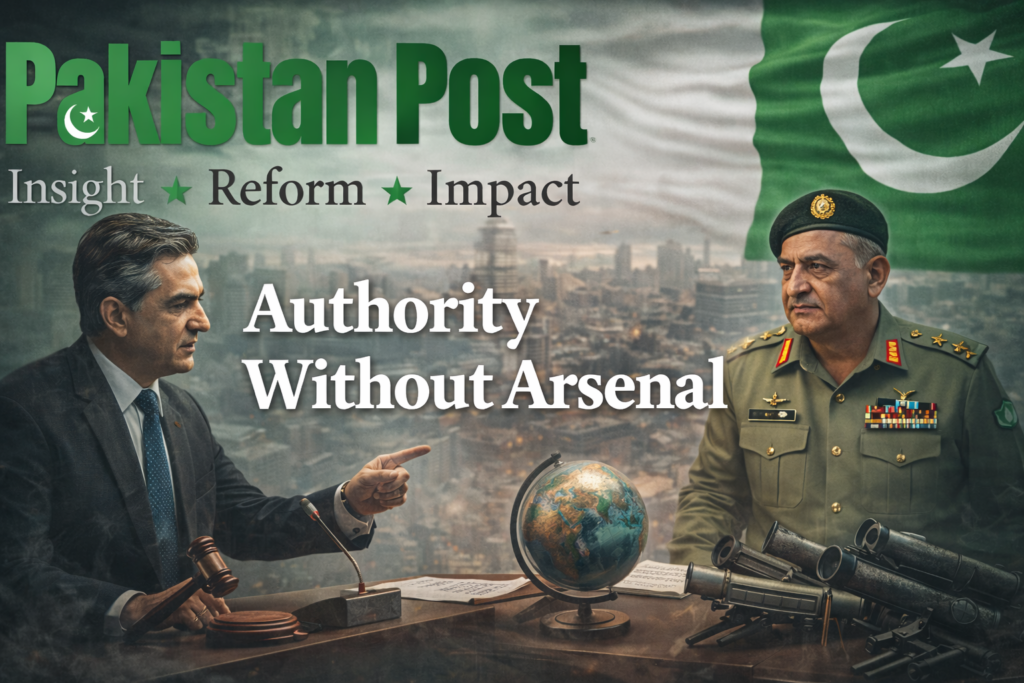
The paralysis of the Security Council following a nuclear detonation would not arise from procedural absence but from structural contradiction. The veto, designed to anchor great power consent, becomes the instrument through which consent is withheld. When the United States, Russia, and China converge not on a solution but on mutual accusation, the Council does not simply stall; it loses its capacity to produce authoritative outcomes. Crisis decision theory suggests that under such conditions actors do not wait for institutional repair. They seek alternative arenas that preserve both voice and influence while minimizing exposure to veto constraints. The emergence of an ad hoc body is therefore not an institutional innovation in the formal sense, but a functional adaptation driven by necessity.
The concept of a Non-Permanent Emergency Council must be understood as a legitimacy seeking mechanism rather than a power projection platform. Its credibility would derive not from coercive capability but from representational balance, procedural agility, and normative positioning. In a post detonation environment, where the nuclear taboo has been breached and deterrence relationships are under acute strain, states without nuclear weapons acquire a distinct form of authority. Their distance from the immediate logic of retaliation allows them to frame the crisis in terms that prioritize containment and stabilization. This is not moral positioning; it is strategic utility. Nuclear armed states are constrained by their own deterrence calculations, whereas non-nuclear states can act with greater flexibility in articulating de-escalation pathways.
The formation of such a body would likely occur within the first forty-eight hours, once it becomes clear that the Security Council cannot produce a binding resolution. The process would begin informally, through consultations among middle powers with established diplomatic capacity and a record of engagement in multilateral processes. The objective would be to assemble a group that is geographically diverse, politically credible, and operationally efficient. Five states emerge as plausible candidates for this role: Germany, Japan, Brazil, South Africa, and Indonesia. Each brings a distinct set of attributes that collectively approximate the functions of a crisis management forum.
Germany offers institutional depth and a central position within European diplomacy. Its influence within the European Union and its reputation for procedural rigor provide a foundation for coordinated action. Japan contributes economic weight and a unique historical perspective as the only state to have experienced nuclear attack, reinforcing the normative dimension of its engagement. Brazil represents Latin America and brings a tradition of diplomatic activism combined with relative strategic autonomy. South Africa provides a link to the African continent and carries the symbolic significance of having voluntarily dismantled its nuclear weapons program, reinforcing its credibility on nonproliferation. Indonesia, as a leading voice within the developing world and a key factor in regional organizations, adds both demographic and political weight.
The absence of nuclear weapons among these states is not incidental; it is central to their credibility. In a crisis triggered by nuclear use, anybody that includes nuclear armed states risks being perceived as an extension of existing power structures. Non-nuclear leadership allows the Emergency Council to position itself as a neutral coordinator rather than a participant in deterrence dynamics. This does not eliminate political bias, but it reduces the structural incentives for escalation embedded in nuclear doctrines. Legitimacy theory suggests that in moments of systemic shock, authority flows toward actors perceived as less entangled in the causes of the crisis. The non-nuclear status of these states functions as a proxy for such detachment.
The operational logic of the Emergency Council would differ significantly from that of the Security Council. It would not seek to produce legally binding resolutions, but rather coordinated statements, recommended actions, and facilitated communication channels. Its effectiveness would depend on speed and coherence rather than formal authority. Crisis decision theory emphasizes the importance of reducing uncertainty and providing focal points for coordination. The Emergency Council would aim to serve as such a focal point, offering a platform where states can align their responses without the procedural delays associated with formal United Nations mechanisms.
Russia and China, despite their roles in the Security Council deadlock, would not be external to this process. Their engagement would be indirect and strategic. Both would monitor the formation and outputs of the Emergency Council closely, assessing whether it aligns with or challenges their interests. Russia, operating within a framework that emphasizes great power status and strategic autonomy, may initially view the body with skepticism. However, if the Emergency Council demonstrates an ability to stabilize the situation without attributing blame in a manner that isolates Moscow, Russia could find it advantageous to engage informally, using the body as a channel for signaling and information exchange.
China’s approach would likely be more calibrated. Its strategic culture places a premium on stability and the avoidance of uncontrolled escalation. While it would resist any initiative that appears to undermine the primacy of the Security Council, it may support the Emergency Council as a supplementary mechanism, particularly if it contributes to de escalation. China’s engagement would be characterized by cautious endorsement, coupled with efforts to shape the body’s agenda in ways that align with its broader vision of international order.
South Korea occupies a distinct position within this landscape. As a non nuclear state under extended deterrence, it is directly affected by shifts in the credibility of nuclear guarantees. The emergence of an Emergency Council provides Seoul with an additional platform to advocate for restraint and to signal its concerns about escalation dynamics in Northeast Asia. South Korea’s participation, whether formal or supportive, would reflect its dual role as both a stakeholder in deterrence relationships and a proponent of stability. Its advanced diplomatic capacity and close ties with multiple major powers enhance its ability to contribute to the Council’s functioning.
Pakistan, observing this process, would approach the Emergency Council as both an analytical subject and a potential partner in stabilization efforts. As a nuclear armed state, Pakistan would not be part of the core group, but its perspective would be relevant to the broader strategic environment. The emphasis for policymakers would be on understanding how the Council’s actions interact with deterrence dynamics and on identifying areas where constructive engagement is possible. This could include support for de escalation initiatives, participation in broader consultations, and alignment with efforts to prevent further nuclear use. The objective is not to shape the Council’s agenda directly, but to ensure that its outputs are consistent with regional and global stability.
The interaction between the Emergency Council and existing United Nations structures would be complex. The General Assembly may provide a formal backdrop for some of its initiatives, lending a degree of institutional visibility. At the same time, the Council’s informal nature allows it to operate with greater flexibility, bypassing some of the constraints that limit formal bodies. This dual positioning enhances its effectiveness but also raises questions about legitimacy and accountability. Legitimacy theory suggests that acceptance by a critical mass of states is sufficient to sustain such a body in the short term, particularly if it delivers tangible outcomes in terms of coordination and communication.
The primary function of the Emergency Council would be to manage the immediate risks of escalation. This involves facilitating communication between key actors, promoting transparency in intentions, and encouraging restraint in both rhetoric and action. Diplomatic signaling frameworks are central to this task. The Council would need to interpret signals from nuclear armed states, assess their implications, and translate them into guidance for the broader international community. This requires a high level of analytical capacity and a willingness to engage with sensitive information.
At the same time, the Council would need to avoid overreach. Its authority is derived from its perceived neutrality and effectiveness, not from formal mandates. Attempting to impose solutions or to attribute responsibility in a manner that alienates key actors could undermine its credibility. The balance between assertiveness and restraint is therefore critical. The Council must be active enough to influence outcomes, but cautious enough to maintain broad support.
The longer-term implications of such a body depend on its performance during the crisis. If it succeeds in contributing to de-escalation and in coordinating international responses, it may establish a precedent for future crises. This does not imply a permanent replacement for the Security Council, but rather the emergence of a complementary mechanism that can be activated when formal structures are incapacitated. Conversely, if the Council fails to produce meaningful outcomes, it may be viewed as an ad hoc experiment with limited relevance.
For Pakistan, the existence of an Emergency Council underscores the importance of flexibility in global governance. Pakistan’s role as an observer and interpreter involves not only assessing the effectiveness of such mechanisms, but also considering how they interact with existing deterrence relationships and regional dynamics. This requires a nuanced understanding of both institutional behavior and strategic signaling.
The absence of nuclear weapons among the leading states of the Emergency Council is both a strength and a limitation. It enhances their legitimacy in advocating for restraint, but it also limits their direct influence over the behavior of nuclear armed actors. Their effectiveness therefore depends on their ability to engage these actors through persuasion, coordination, and the creation of shared incentives for de-escalation. This is a demanding task, requiring diplomatic skill and strategic clarity.
In the final analysis, the formation of a Non-Permanent Emergency Council reflects the adaptive capacity of the international system under conditions of extreme stress. It demonstrates that when formal mechanisms are blocked, states can construct alternative pathways for coordination and communication. The success of such efforts is not guaranteed, but their emergence is a predictable response to institutional paralysis. The challenge is to ensure that these alternative structures contribute to stability rather than fragmentation, reinforcing the broader objective of preventing further escalation in an already volatile environment.
A Public Service Message