Corruption Beyond Scandals, Silent Institutional Decay Governance


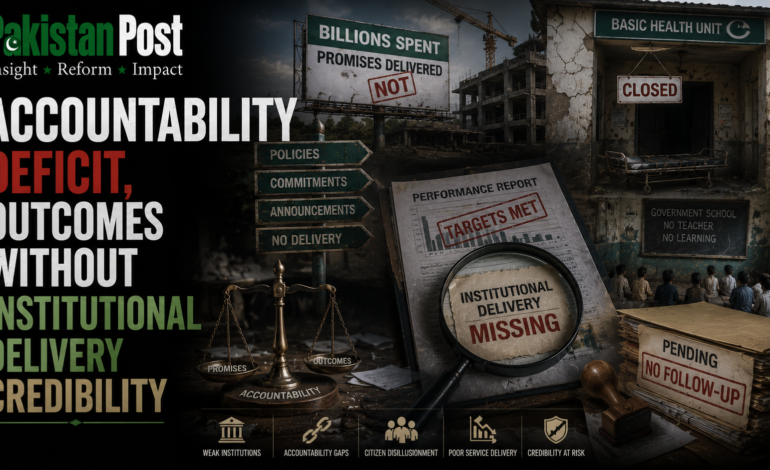
In contemporary governance discourse, corruption is increasingly misread through an anachronistic lens that confines it to episodic scandals, financial misappropriation, and high visibility indictments. Yet in the structural reality of states operating under fiscal compression, external conditionalities, and institutional overstretch, corruption has mutated into a far more intricate and less visible phenomenon. It now resides not only in the overt act of illicit enrichment but in the architecture of delay, procedural exhaustion, administrative ambiguity, and normalized inefficiency that collectively constitute what may be termed as silent institutional extraction.
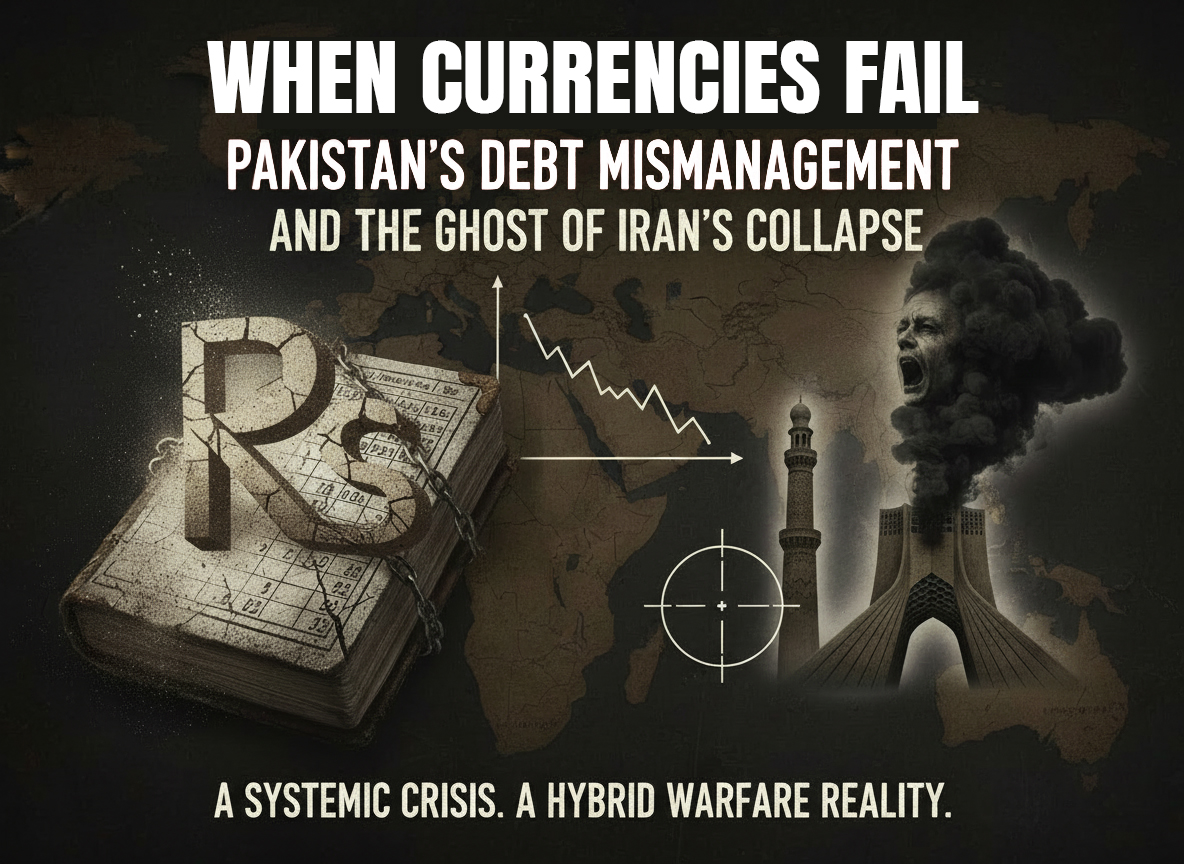
Within Pakistan’s evolving macroeconomic environment, this phenomenon is particularly consequential. Under continuing engagement with multilateral frameworks such as IMF stabilisation programmes, conditional fiscal tightening, and externally advised energy tariff rationalisation, the state is increasingly compelled to enhance revenue mobilisation while simultaneously reducing fiscal leakage. However, a critical analytical gap persists between formal compliance narratives and informal administrative realities. Energy taxation reforms, for instance, often reflect alignment with external donor expectations, yet their transmission into efficient, transparent, and leak-resistant administrative systems remains structurally incomplete.
The central argument advanced here is that corruption has shifted from being an exceptional deviation to becoming an embedded governance condition. It is no longer solely the product of individual misconduct but the cumulative outcome of weak institutional synchronisation, fragmented accountability chains, and chronically under-digitised bureaucratic interfaces. In such an environment, inefficiency itself becomes a fiscal liability equivalent in magnitude to overt corruption, albeit lacking its visibility.
This silent corruption manifests most acutely in procedural latency. The extended duration required for approvals, certifications, clearances, and inter-departmental coordination produces a hidden tax on economic activity. Investors internalise delay as risk premium, citizens experience governance as friction, and the state absorbs reputational erosion in global competitiveness indices. These costs rarely appear in official documentation, yet they form a parallel economy of institutional loss.
At the macro level, this condition becomes particularly problematic when juxtaposed with IMF-driven fiscal restructuring. Energy sector reforms, especially new taxation instruments introduced under revenue augmentation frameworks, rely heavily on administrative precision. However, when the implementing machinery is characterised by discretionary interpretation, manual override points, and opaque procedural hierarchies, the intended efficiency gains are diluted. The result is a paradoxical configuration in which the state appears reform-compliant on paper while remaining structurally inefficient in practice.
International financial institutions typically operate through quantifiable macro indicators, yet governance inefficiencies of this nature are difficult to capture within standardised fiscal matrices. Consequently, a divergence emerges between macroeconomic stabilisation narratives and micro-institutional realities. This divergence produces what can be described as a compliance illusion, where structural reform is reported but not fully realised.
The deeper concern for policy makers, particularly within strategic institutions, is that this form of corruption is self-reinforcing. As procedural inefficiency becomes normalised, it generates incentives for informal facilitation mechanisms. These mechanisms are not always monetarily explicit but function through preferential access, accelerated processing, and discretionary prioritisation. Over time, such patterns erode institutional neutrality and introduce differential citizenship in administrative access.
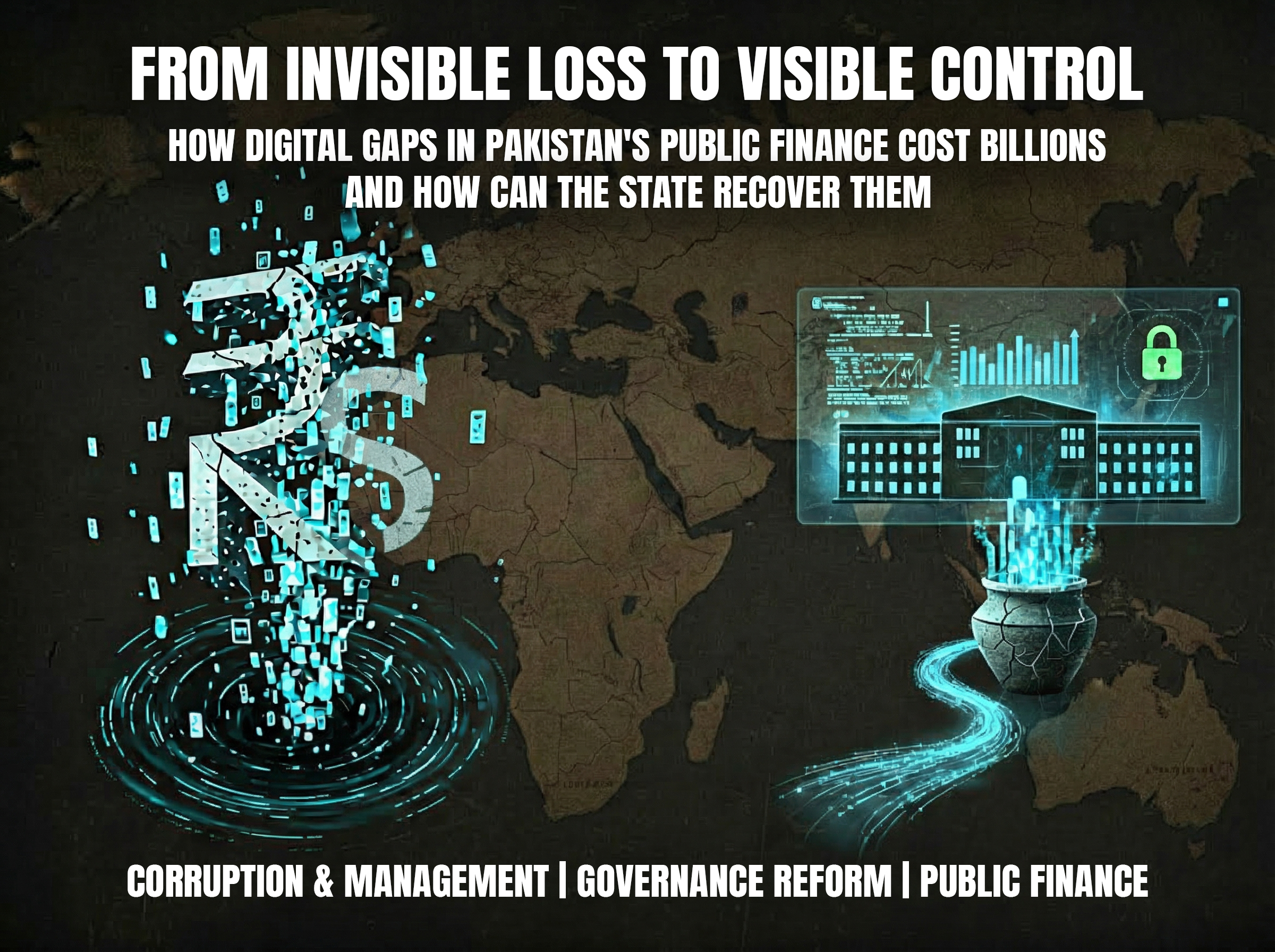
From a strategic governance perspective, this evolution demands a recalibration of anti-corruption doctrine. Traditional enforcement-centric models, which rely on post-facto investigation and punitive action, are insufficient in addressing systemic inefficiency. What is required instead is a transition toward predictive governance architecture, where institutional performance is continuously monitored through real-time data analytics, service delivery time benchmarks, and digital traceability of administrative workflows.
Pakistan’s administrative ecosystem remains partially digitised, yet lacks integration across institutional silos. This fragmentation allows inefficiency to persist within interstitial zones where accountability is diffused. A permit may be digitised within one department, yet require manual validation in another, creating hybrid systems that combine technological appearance with analog functionality. This duality sustains opacity while maintaining a façade of reform.
The energy sector illustrates this contradiction most clearly. As energy taxation structures are recalibrated under fiscal consolidation imperatives, revenue expectations are increasingly tied to efficiency gains. However, distributional losses, delayed billing cycles, non-standardised enforcement mechanisms, and weak audit interoperability reduce net fiscal yield. Thus, the state experiences reform fatigue, where policy intensity increases without proportional improvement in outcomes.
At the geopolitical level, these inefficiencies carry additional implications. External partners, including multilateral lenders and strategic allies, evaluate governance performance not merely through fiscal compliance but through institutional reliability. Persistent inefficiency signals structural fragility, which can influence credit risk assessments, investment flows, and diplomatic bargaining positions. In this sense, silent corruption is not merely an internal administrative issue but a factor in external perception engineering.
The institutional response required must therefore extend beyond conventional reform rhetoric. First, there is a need to establish unified administrative throughput metrics across federal and provincial systems, enabling quantifiable measurement of procedural time loss. Second, energy and taxation agencies must be integrated into interoperable digital ecosystems that eliminate discretionary bottlenecks. Third, audit institutions must transition from sample-based review to continuous monitoring frameworks supported by automated data validation systems.
Moreover, performance accountability must be decoupled from procedural compliance and reattached to outcome delivery. At present, institutional success is often measured by activity volume rather than efficiency output. This creates perverse incentives where administrative expansion is rewarded even when delivery quality stagnates. A recalibration toward outcome-weighted governance indices is therefore essential.
From a strategic policy standpoint, the most critical concern is that silent corruption is difficult to politically mobilise against. Unlike scandal-based corruption, it does not produce visible triggers for reform urgency. It operates within normalised administrative rhythms, making it politically less visible and institutionally more resilient. This invisibility constitutes its greatest strength and the state’s most significant vulnerability.
In the context of IMF-aligned fiscal restructuring and energy sector reform, failure to address this structural inefficiency risks undermining macroeconomic stabilisation efforts. Revenue gains projected through new taxation frameworks may be partially neutralised by administrative leakage. Similarly, public trust in reform narratives may erode if lived experience of governance does not improve proportionally.
For policy makers operating within high-level strategic institutions, the implication is clear. Governance reform cannot remain confined to legislative adjustment or fiscal recalibration. It must penetrate the operational substrate of the state itself, where inefficiency masquerades as routine procedure. Without this deeper intervention, reform will continue to generate symbolic compliance while structural decay persists beneath the surface.
In conclusion, corruption in its contemporary form is no longer an event but an environment. It is embedde in time delays, procedural ambiguity, and institutional fragmentation. Addressing it requires a shift from reactive governance to systemic redesign, from punitive frameworks to predictive analytics, and from narrative reform to measurable transformation. The silent economy of inefficiency must now be treated as a central policy variable rather than an incidental administrative flaw.
Failure to do so will ensure that the most consequential form of corruption remains the least visible, and therefore the least addressed, within the governance architecture of the state.
A Public Service Message