Procurement, Budget Leaks, and Audit Objections: The Hidden Cost of Financial Mismanagement in Government Programs

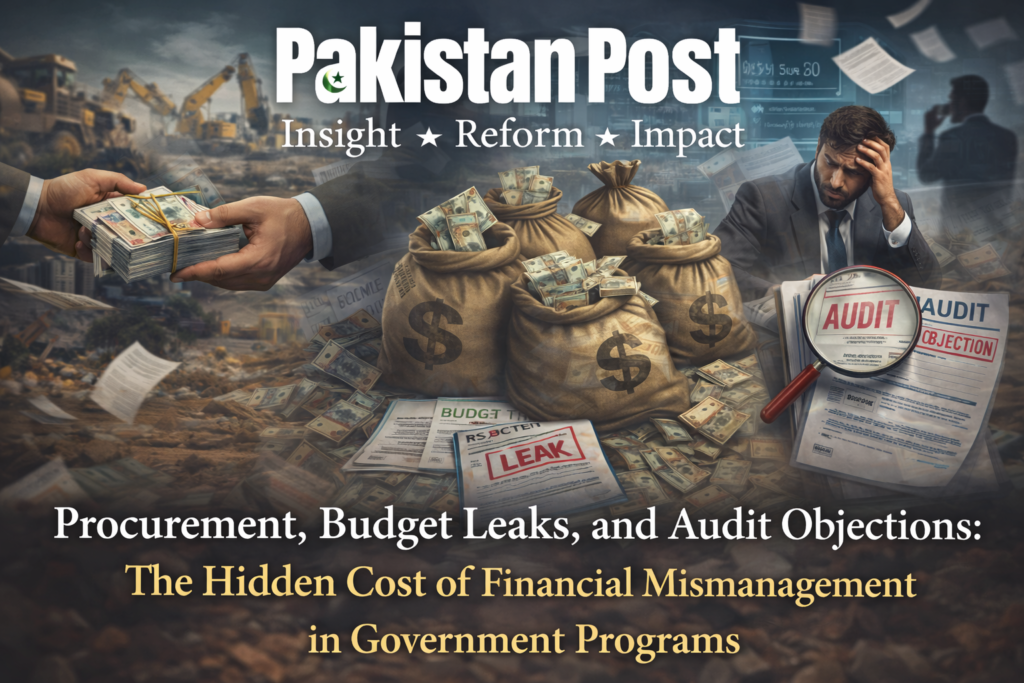
Public finance is not an abstract ledger of numbers. It is a moral and institutional commitment. Every rupee allocated in a national or provincial budget represents the collective sacrifice of citizens, whether through taxation, inflation, or deferred public services. When procurement processes are bypassed, when budgetary controls are ignored, or when public funds are spent without proper authorization, the loss is not merely financial. It is institutional, social, and ethical.
Recent observations from oversight forums and public audit reports have again brought attention to procurement irregularities, unauthorized expenditures, and systemic weaknesses in financial management across various ministries and state authorities. These findings are not isolated. They appear periodically, often repeating similar patterns. Non competitive procurement, unapproved reallocation of funds, maintenance of bank accounts outside prescribed frameworks, and failure to reconcile advances and grants continue to surface in official reviews. The persistence of such observations indicates that financial mismanagement is not simply an error of judgment in individual cases. It is a structural weakness that demands systemic reform.
It is important to approach this subject without personal vilification. Institutions are larger than individuals. Officials operate within administrative cultures, incentive structures, and procedural frameworks that may themselves be flawed. Yet acknowledging systemic factors does not mean ignoring the reality of corruption or financial negligence. Misuse of public funds, whether through deliberate manipulation or reckless disregard for rules, weakens governance and erodes public trust. The task before policymakers, administrators, and citizens is to transform audit revelations into sustainable reform rather than episodic outrage.
Procurement lies at the center of public expenditure. Government programmes depend on the acquisition of goods, services, and infrastructure. From medical supplies in hospitals to textbooks in schools, from construction contracts to information technology systems, procurement decisions directly affect the quality and cost of public service delivery. Competitive bidding frameworks exist to ensure fairness, efficiency, and transparency. When procurement is conducted without open competition, it increases the risk of inflated prices, substandard materials, and preferential treatment.
Financial mismanagement often begins with small deviations that gradually normalize. An emergency purchase made without full documentation may be justified initially by urgency. A vendor selected without competitive bidding may be defended as experienced or reliable. A budget reallocation may be described as a practical adjustment to shifting priorities. However, when such deviations are not subjected to rigorous scrutiny, they create precedents. Over time, rule based procurement transforms into discretionary procurement, and discretion without accountability can slide into corruption.
The translation of procurement violations into financial loss is not always immediately visible. Inflated contract prices may be absorbed within overall project budgets. Inferior materials may deteriorate gradually, requiring costly repairs or replacements. Delayed projects may increase administrative overheads and opportunity costs. In social sector programmes, inefficiency may not appear in financial statements but in diminished outcomes. When a public health campaign is underfunded because resources were misallocated elsewhere, the cost is measured in human vulnerability.
Audit objections play a critical role in identifying such weaknesses. Public auditing institutions are designed to review compliance with financial rules, verify documentation, and assess whether expenditures align with authorized budgets. Their observations serve as institutional memory. They highlight patterns of irregularity and bring them into formal records. However, the impact of audit findings depends largely on the seriousness with which they are addressed.
In many instances, audit reports reveal significant sums categorized as unauthorized expenditures or procedural violations. Sometimes departments open bank accounts without requisite approvals. At other times, payments are made without proper tendering or evaluation. Advances are issued but not adjusted within prescribed timelines. Grants allocated for specific programmes remain unaccounted for or diverted to unrelated activities. These findings do not merely reflect technical lapses. They reveal weaknesses in internal control systems.
Internal controls are the invisible architecture of financial discipline. They include segregation of duties, authorization protocols, documentation requirements, reconciliation processes, and supervisory reviews. When these controls function effectively, irregularities are detected early. When they are weak or bypassed, financial leakage becomes easier. In some departments, overlapping responsibilities create confusion. In others, understaffed finance units lack the capacity to conduct thorough reviews. In yet others, informal pressures discourage strict enforcement of rules.
A culture of impunity can develop when irregularities are routinely observed but rarely sanctioned. If officials perceive that audit objections will lead only to procedural replies rather than substantive accountability, compliance becomes optional. Over time, this weakens deterrence. Financial rules, which are meant to safeguard public interest, begin to appear as bureaucratic hurdles rather than essential safeguards.
Parliamentary scrutiny is a vital component of fiscal accountability. Legislative committees examine audit findings, question departmental representatives, and demand explanations for deviations. When these proceedings are rigorous and transparent, they reinforce the seriousness of financial discipline. They signal that public funds are subject to oversight beyond the executive branch. However, the effectiveness of such scrutiny depends on follow through. Recommendations must translate into corrective actions, policy reforms, and where necessary, disciplinary measures.
The hidden cost of financial mismanagement extends beyond lost funds. It distorts development priorities. When resources leak through inflated procurement or unauthorized spending, less remains for essential programmes. Infrastructure projects may remain incomplete. Social protection schemes may face budgetary constraints. Citizens may experience delays or reductions in services. The cumulative effect is diminished public welfare.
Financial mismanagement also damages the credibility of reform initiatives. Governments often announce ambitious development agendas. Yet if procurement and budgeting processes are perceived as compromised, even well intentionedprogrammes may face skepticism. International partners and investors may raise concerns about transparency and governance standards. Domestic taxpayers may question whether their contributions are being utilized effectively.
It is equally important to recognize the administrative pressures that sometimes contribute to irregular spending. Budget cycles can be rigid. Funds allocated late in the fiscal year may create urgency to spend before lapsing. This can encourage rushed procurement decisions and inadequate documentation. Multi year projects may face cash flow mismatches between allocations and implementation schedules. Reform must address these structural pressures to reduce incentives for procedural shortcuts.
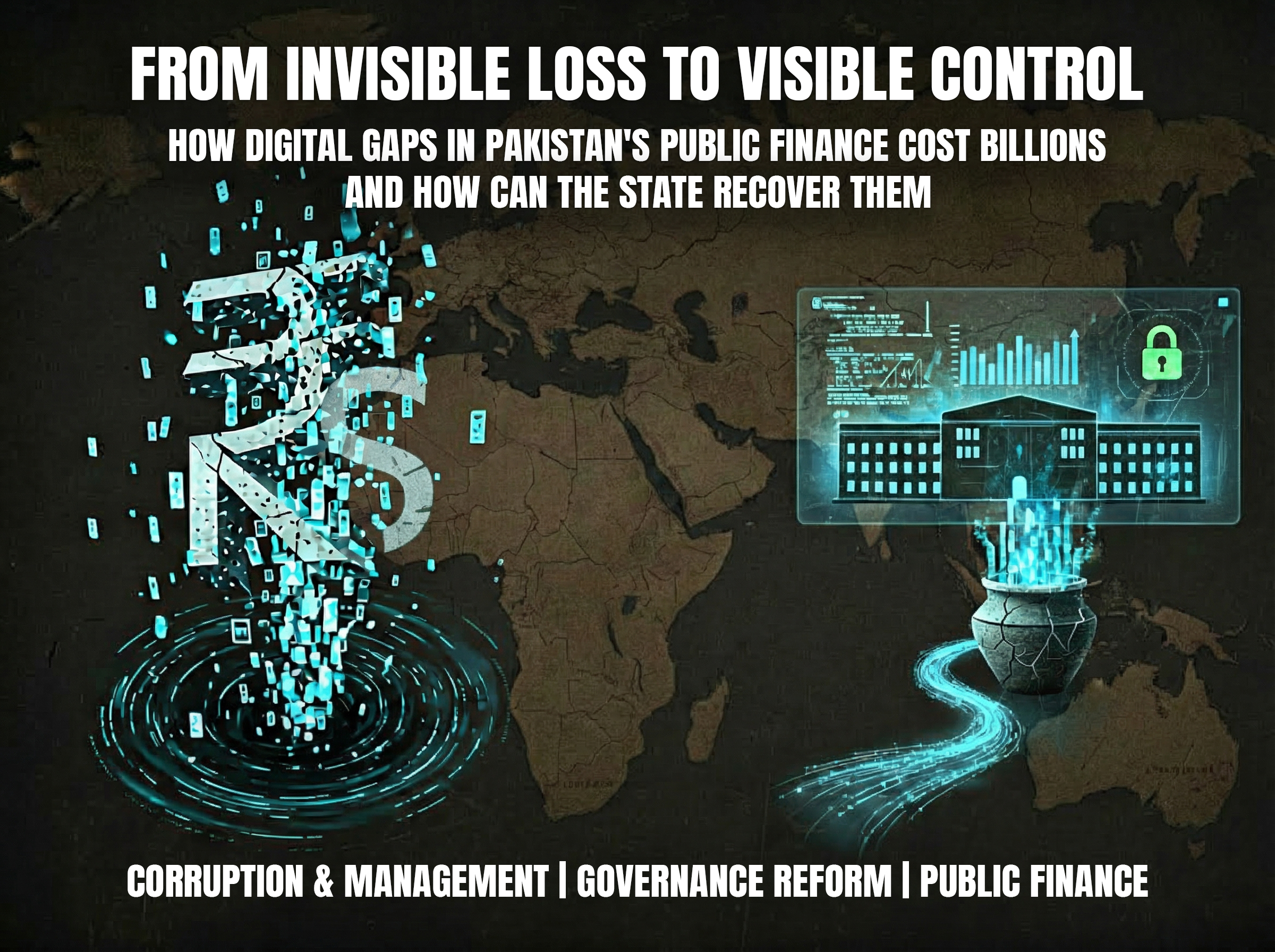
Digital transformation offers promising avenues for strengthening financial oversight. E procurement platforms can standardize bidding processes, record submissions, and increase transparency. Integrated financial management information systems can track allocations, commitments, and expenditures in real time. Automated reconciliation tools can reduce manual errors and flag anomalies. However, technology is effective only when supported by trained personnel and clear accountability frameworks. Without ethical commitment and managerial discipline, digital systems can be manipulated or underutilized.
Transparency to the public is another powerful reform tool. Publishing procurement notices, awarded contracts, and budget utilization reports online allows citizens, journalists, and civil society organizations to scrutinize public spending. Openness deters misconduct by increasing the probability of exposure. It also fosters informed public debate about policy priorities and resource allocation.
Capacity building within financial management cadres is essential. Public sector accountants, procurement officers, and budget analysts require continuous professional development. Complex projects demand expertise in contract management, risk assessment, and performance evaluation. Investing in human capital within finance departments strengthens institutional resilience against mismanagement.
The ethical dimension cannot be ignored. Financial rules are not merely technical instruments. They embody principles of fairness, equity, and stewardship. Public officials are trustees of collective resources. Cultivating an ethical culture within institutions requires leadership by example. Senior administrators must demonstrate adherence to rules and zero tolerance for misuse. When ethical behavior is modeled at the top, it cascades downward.
Whistleblower protection mechanisms can also enhance accountability. Employees who observe irregularities may hesitate to report them due to fear of retaliation. Clear legal frameworks and confidential reporting channels encourage internal correction before issues escalate. Protecting those who act in the public interest reinforces institutional integrity.
Reform must also consider the balance between control and flexibility. Excessively complex procurement regulations may inadvertently create opportunities for manipulation. Simplifying procedures while maintaining transparency can reduce discretionary loopholes. Clear timelines, standardized evaluation criteria, and objective scoring systems minimize ambiguity.
Budget discipline requires realistic planning. Overambitious allocations without feasibility assessments can lead to mid year adjustments and irregular spending. Strengthening the link between policy planning and budget formulation enhances coherence. Performance based budgeting frameworks, which tie allocations to measurable outcomes, can shift focus from mere expenditure to effectiveness.
The judiciary and anti corruption bodies have complementary roles in addressing serious financial misconduct. When clear evidence of fraud or embezzlement emerges, legal consequences must follow. However, not all audit objections imply criminal intent. Some reflect procedural noncompliance or administrative inefficiency. Distinguishing between negligence and deliberate corruption is necessary to ensure fairness and proportionality.
Civil society engagement enriches fiscal governance. Research institutions can analyze audit data to identify systemic trends. Media coverage that explains financial irregularities in accessible language can raise awareness without sensationalism. Public education about budgeting processes empowers citizens to demand accountability constructively.
Ultimately, procurement and budgeting are expressions of governance values. They reveal whether institutions prioritize transparency or expediency, accountability or opacity. Reform requires sustained commitment rather than reactive measures following high profile controversies. It demands alignment between legal frameworks, administrative practices, and ethical standards.
The conversation about financial mismanagement should not be framed as an indictment of the state itself. Public institutions remain indispensable for social development and economic stability. The objective is not to undermine confidence but to strengthen it through reform. Acknowledging weaknesses is the first step toward institutional maturity.
The hidden cost of budget leaks is measured not only in lost funds but in missed opportunities. Every inflated contract price represents a classroom not built, a clinic not equipped, a social programme not expanded. Every unauthorized expenditure erodes the credibility of fiscal planning. Every unresolved audit objection signals unfinished accountability.
Yet there is reason for cautious optimism. The very existence of detailed audit reports, parliamentary debates, and public scrutiny demonstrates that oversight mechanisms are functioning to some extent. The challenge lies in converting observation into transformation. Strengthening internal controls, modernizing procurement systems, empowering oversight institutions, and fostering ethical leadership can gradually reduce financial leakage.
Public finance management is a continuous process. It requires vigilance, adaptation, and collective responsibility. Administrators must embrace transparency as a tool for legitimacy. Legislators must exercise oversight with diligence and fairness. Citizens must remain engaged without succumbing to cynicism.
In the end, fiscal integrity is inseparable from democratic integrity. When public funds are managed with discipline and transparency, trust deepens. When mismanagement persists unchecked, faith in institutions weakens. The choice is not between criticism and loyalty. It is between complacency and reform.
By confronting procurement violations and budget irregularities with seriousness and systemic solutions, governments can reaffirm their commitment to accountability. The objective is not perfection but progress. Financial discipline is not an obstacle to development. It is its foundation.
A Public Service Message