

Pakistan’s Product Space Trap: Pathways to Export Upgrades and Geoeconomic Resilience

Pakistan’s position in the global product space reveals deep structural vulnerabilities that erode its export competitiveness and macroeconomic stability. At its core, this analysis, grounded in Ricardo Hausmann’s pioneering framework, illuminates not just economic diagnostics but a geoeconomic philosophy. Nations thrive not by

Strategic Hedging Post-Iranian Crisis — How China and the Middle East Can Ensure Pakistan’s Stability in a Similar Situation

The ongoing turbulence in Iran has become a live demonstration of how pressure against states is now prosecuted in the modern international system. What is unfolding is not a classic confrontation of armies or borders, but a prolonged contest aimed at exhausting economic
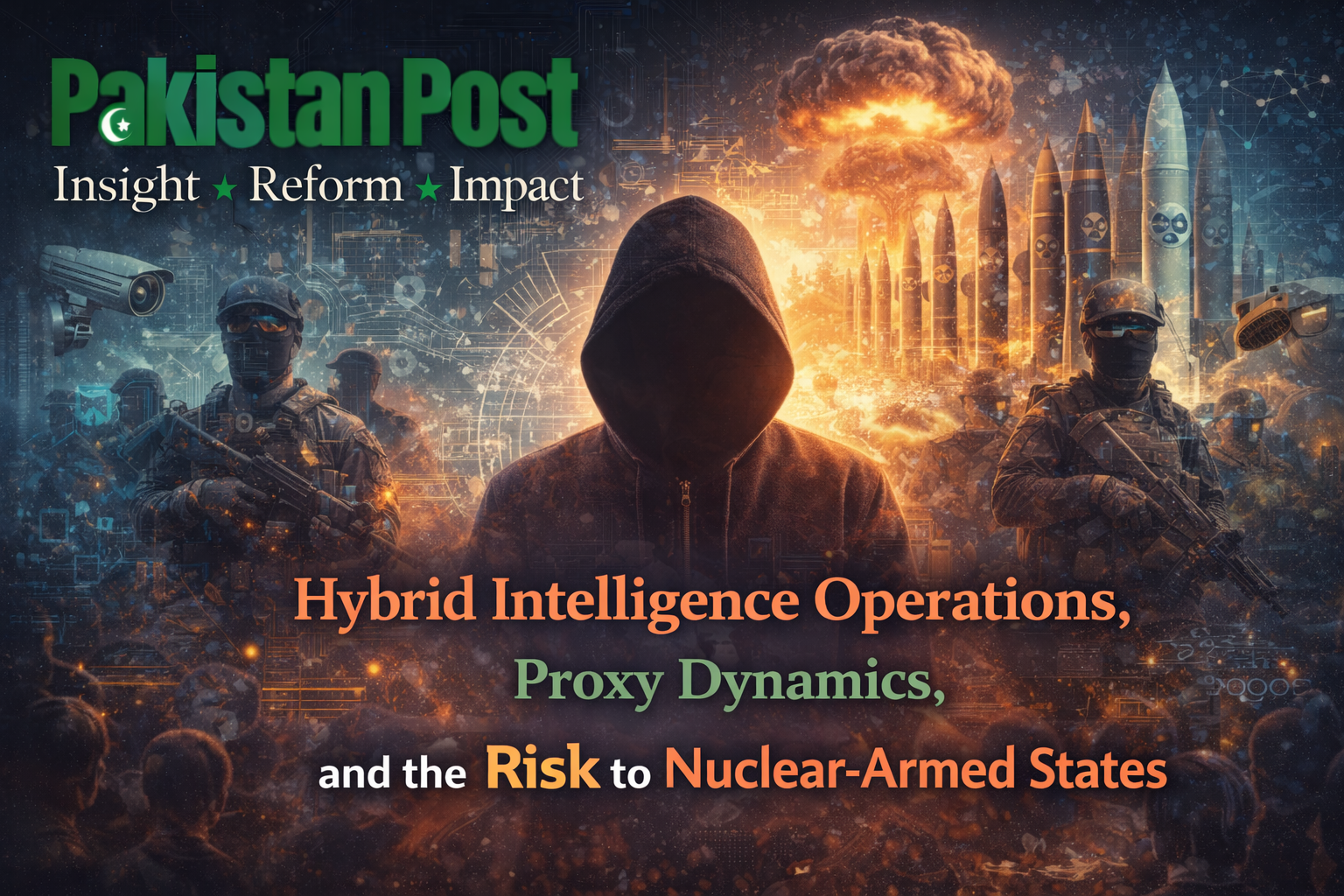
Hybrid Intelligence Operations, Proxy Dynamics, and the Risk to Nuclear-Armed States
Across the cities and towns of Iran, from Tehran’s historic Grand Bazaar to the industrial belts of Isfahan and Mashhad, the economic crisis that has deepened since late 2025 has now erupted into the most significant wave of unrest the nation has seen

Geo-Economic Warfare and Inner-Front Destabilization- Lessons from Iran for Pakistan
The recent internal crisis in Iran is increasingly examined in global strategic discourse as a revealing case study of how modern geo-economic warfare and hybrid pressure mechanisms can converge to generate large-scale internal instability, even within states that possess strong ideological cohesion, complex
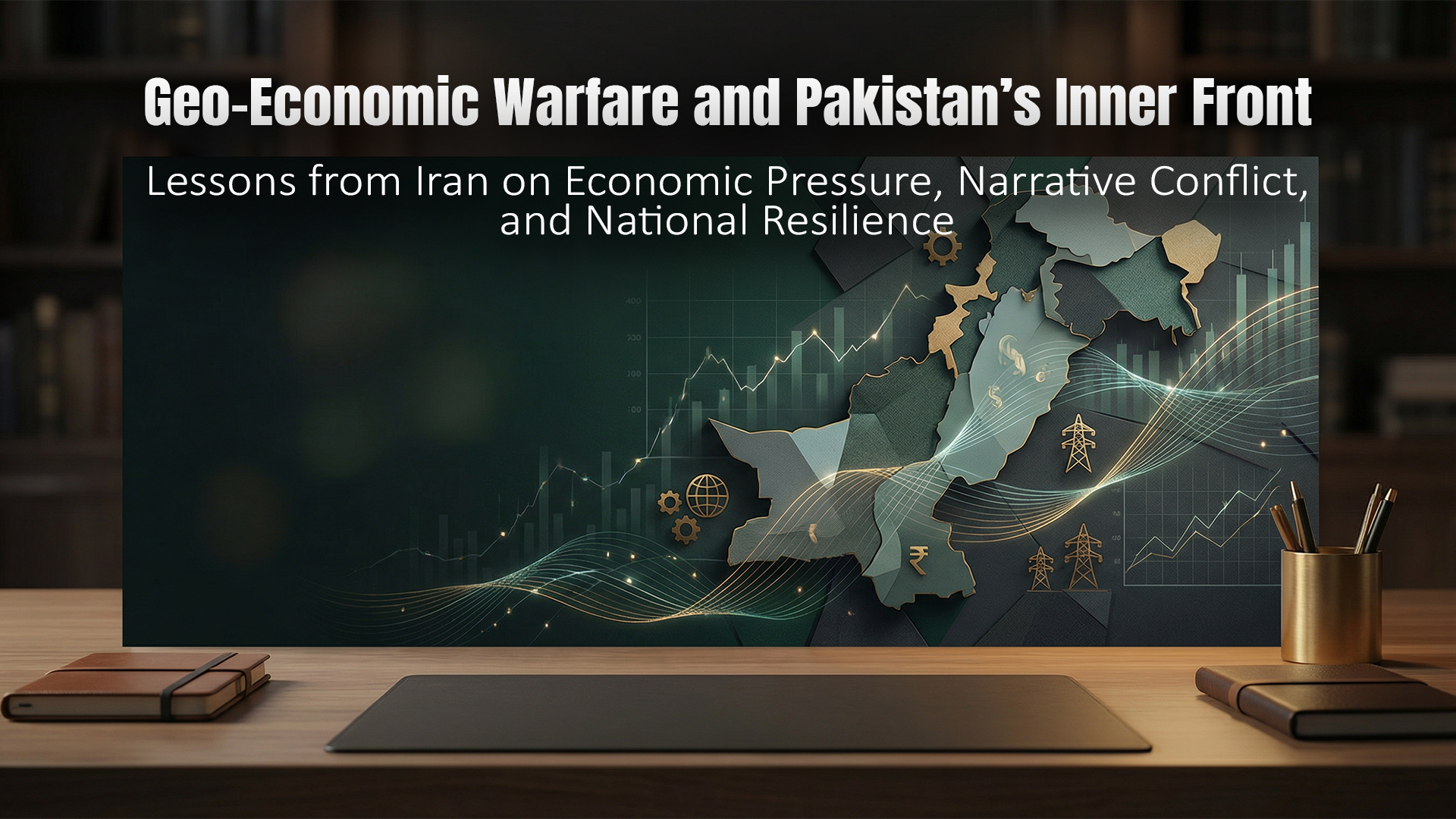
Geo-Economic Warfare and Inner-Front Destabilization — Lessons from Iran for Pakistan

By Hesham Sultan Ijaz The recent internal crisis in Iran is increasingly examined in global strategic discourse as a revealing case study of how modern geo-economic warfare and hybrid pressure mechanisms can converge to generate large-scale internal instability, even within states that possess
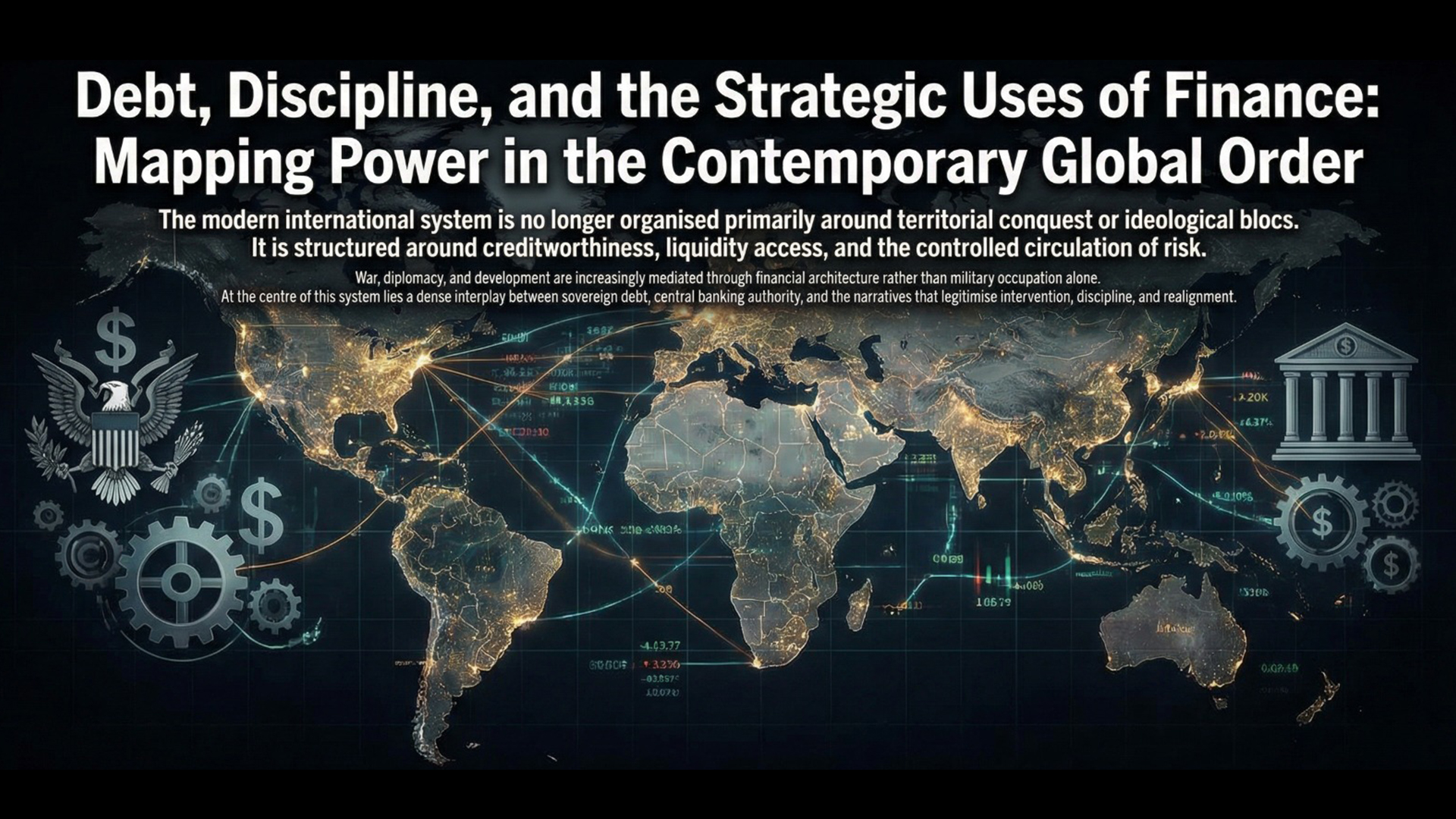
Debt, Discipline, and the Strategic Uses of Finance: Mapping Power in the Contemporary Global Order
By Ijaz Naser The modern international system is no longer organised primarily around territorial conquest or ideological blocs. It is structured around creditworthiness, liquidity access, and the controlled circulation of risk. War, diplomacy, and development are increasingly mediated through financial architecture rather than
Ripple Effects Historic Proportions of Global Order
BY Hesham Sultan The global order is undergoing a transformation of historic proportions, driven principally by the intensifying rivalry between the United States and China, a contest that encompasses economic, technological, and geopolitical dimensions. This contest is no longer confined to the familiar