Artificial Intelligence as a Strategic Decision-Making Partner in Pakistan

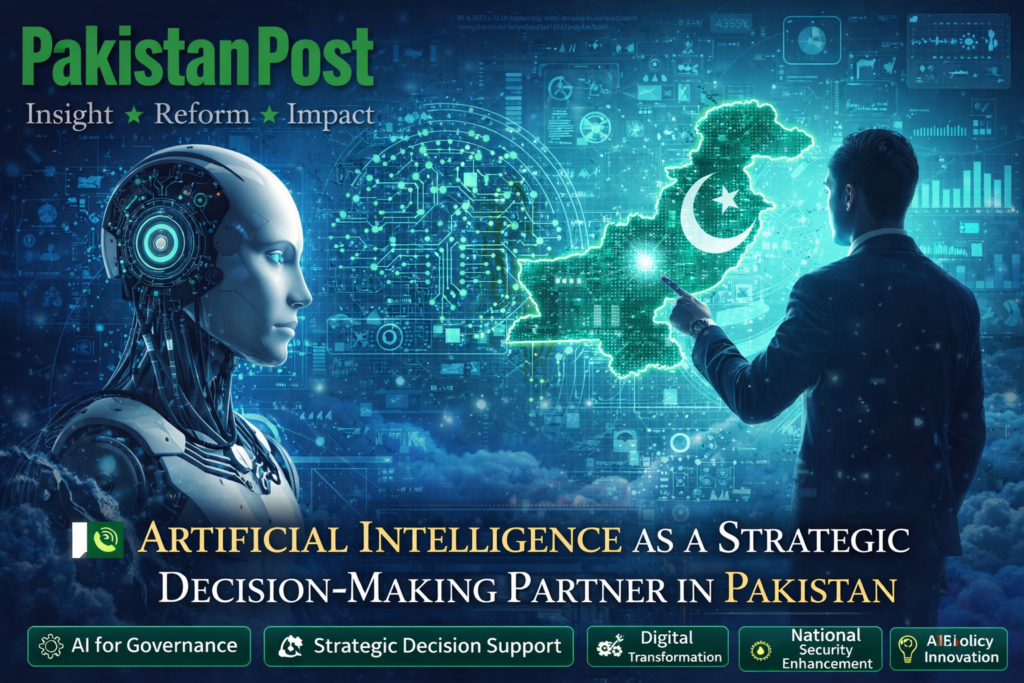
Artificial Intelligence represents one of the most transformative technological forces of the twenty-first century, reshaping the way organizations, governments, and societies approach decision-making, problem-solving, and operational efficiency. Its potential in Pakistan extends far beyond simple automation or routine tasks, offering institutions the ability to think strategically, simulate outcomes, and make decisions informed by multi-dimensional insights. Across sectors critical to national development, from healthcare to education and public administration, AI is increasingly becoming a partner in shaping solutions that are both innovative and pragmatic. The true value of AI lies not in the speed of responses it generates but in the depth of reasoning, context-driven analysis, and foresight it can provide when engaged thoughtfully and purposefully.
In the healthcare sector, hospitals in Pakistan face persistent challenges in operational efficiency, patient care, and resource management. Emergency departments, in particular, are environments where patient volumes fluctuate unpredictably, often creating bottlenecks that compromise both care quality and patient experience. Traditionally, administrators have relied on reactive measures or intuition-based adjustments, which are limited by human cognitive capacity and available data. AI, when leveraged strategically, transforms this environment by providing predictive insights, structured reasoning, and scenario modeling. By simulating patient inflows, staffing requirements, and procedural efficiencies, AI enables decision-makers to anticipate peaks in demand, optimize resource allocation, and reduce wait times without compromising quality of care. This predictive capability is amplified when AI is prompted with expert-level context, encouraging it to reason through complex trade-offs and constraints as a seasoned healthcare operations specialist would.
Consider a hospital planning to deploy a new AI-driven diagnostic tool. A conventional approach might focus narrowly on acquisition costs or immediate operational benefits. By contrast, AI can guide administrators through a multi-perspective analysis, evaluating the tool from the standpoint of patient safety, cost-effectiveness, long-term scalability, staff training, and regulatory compliance. It can simulate scenarios including best case, worst case, and most likely outcomes, allowing leaders to identify potential unintended consequences before they manifest. AI can even model dynamic variables such as disease prevalence trends, seasonal patient surges, and the impact of concurrent public health initiatives. This enables administrators to make decisions not only based on current operational realities but also informed by potential future conditions, creating a strategic advantage that extends far beyond conventional decision-making frameworks.
The educational sector in Pakistan presents equally compelling opportunities for AI-driven decision-making. Universities are increasingly tasked with managing digital transformation, integrating learning management systems, optimizing student services, and aligning academic operations with global standards. Many institutions struggle with fragmented processes, inconsistent decision-making criteria, and subjective evaluation methods. AI can address these challenges by creating structured decision frameworks that transform repeated decisions into systematic processes. For example, a university evaluating learning management systems can employ AI to generate a scoring matrix based on criteria such as user interface design, integration with existing systems, cost efficiency, security protocols, and adaptability to future needs. AI can iteratively refine the framework by comparing outcomes against real-world implementations, providing a continuous learning loop that enhances institutional knowledge and strategic judgment.
The strength of AI lies not only in optimizing routine processes but also in enhancing human reasoning. When engaged to explain its decision-making step by step, AI illuminates the factors it considers, the trade-offs it evaluates, and the potential pitfalls that may arise. This capacity for transparent reasoning enables institutional leaders to understand not only what decisions AI recommends but also why, fostering a culture of informed judgment and accountability. In healthcare, this could mean clarifying why certain staffing allocations are prioritized over others or why a particular diagnostic approach minimizes risk while maximizing efficiency. In education, it might involve explaining why a certain learning technology scores higher than another despite similar functional features. This level of insight transforms AI from a reactive tool into a strategic advisor, helping organizations cultivate expertise, anticipate challenges, and implement solutions with confidence.
Scenario planning is another dimension in which AI demonstrates its transformative potential. Major organizational decisions often involve uncertainty, risk, and interdependent variables that are difficult to quantify using conventional methods. AI can simulate multiple scenarios simultaneously, offering best case, worst case, and most likely outcomes, as well as highlighting unexpected consequences that human planners may overlook. Decision trees generated by AI can differentiate between reversible and permanent actions, enabling leaders to design strategies that are adaptive and resilient. In Pakistan, where organizations frequently operate under conditions of resource constraint, regulatory complexity, and fluctuating market or demographic dynamics, this capability is particularly valuable. It empowers institutions to anticipate risk, optimize strategic choices, and implement solutions that are both practical and forward-looking.
The adoption of AI as a decision-making partner also fosters a culture of iterative learning and continuous improvement. Rather than accepting a single solution as final, organizations can use AI to review, critique, and refine strategies multiple times, assessing potential gaps and uncovering overlooked opportunities. This iterative process is akin to cultivating an internal think tank powered by AI, where each cycle of analysis deepens institutional understanding, hones judgment, and strengthens operational resilience. Over time, organizations develop adaptive intelligence, where human expertise and machine insight converge to produce outcomes that are consistently superior to those achieved through either alone.
Beyond operational decision-making, AI can influence broader strategic thinking. In healthcare, this includes planning for public health initiatives, resource allocation across hospital networks, and long-term infrastructure investments. In education, AI can inform national strategies for curriculum design, digital learning adoption, and policy formulation. By integrating AI into these high-level processes, Pakistani institutions can move from reactive problem-solving to proactive, data-driven governance. AI serves as a lens through which leaders can explore complex scenarios, weigh competing priorities, and make choices that balance efficiency, quality, and sustainability.
The broader societal impact of AI adoption in Pakistan cannot be overstated. Institutions that harness AI effectively are positioned to deliver higher quality services, optimize resource use, and enhance decision-making across multiple layers of governance. For healthcare, this translates into more efficient patient care, reduced operational bottlenecks, and improved population health outcomes. In education, it enables institutions to provide equitable access to technology, personalize learning, and generate insights that inform policy development. In public administration, AI can support evidence-based decision-making, improve transparency, and enhance responsiveness to citizen needs. These benefits collectively contribute to the long-term competitiveness, resilience, and global relevance of Pakistani institutions.
To realize this potential, organizations must approach AI strategically rather than tactically. AI must be integrated with a clear understanding of context, constraints, and objectives. Specificity in engagement is critical, as is defining the role AI plays in decision-making, whether as an advisor, a scenario simulator, or a system optimizer. Iterative engagement, multi-perspective analysis, and scenario simulation are essential to transforming AI from a reactive computational tool into a foresight-driven strategic partner. Leaders must cultivate a culture of curiosity, reflection, and informed experimentation, leveraging AI to amplify human judgment rather than replace it.
Pakistan stands at a pivotal juncture in the global AI revolution. By embracing AI as a strategic decision-making partner, institutions across the nation can transform their operational and strategic capabilities, moving beyond reactive management toward anticipatory, evidence-based leadership. The integration of AI into organizational and institutional ecosystems offers a unique opportunity to enhance efficiency, reduce risk, and unlock insights that were previously inaccessible. When applied thoughtfully, AI becomes a catalyst for smarter decision-making, operational excellence, and sustainable growth, positioning Pakistan to harness the full potential of the technological frontier.
The journey toward AI-driven decision-making in Pakistan is not without challenges. Issues such as data availability, technical literacy, ethical considerations, and regulatory frameworks must be addressed for AI to be fully effective. Nevertheless, institutions that prioritize structured engagement, iterative learning, and multi-dimensional analysis will be best positioned to navigate these challenges and realize transformative outcomes. In essence, AI offers not a shortcut but a pathway to enhanced institutional intelligence, where every decision is informed by insight, every strategy is tested against uncertainty, and every outcome is optimized for long-term success. The opportunity for Pakistan is immense, and the time to act is now, embracing AI as a strategic partner in shaping the future of healthcare, education, governance, and beyond.
A Public Service Message