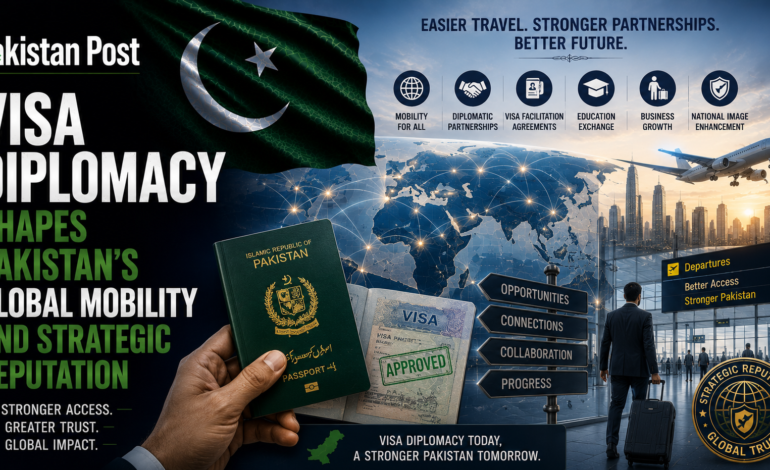
Visa Diplomacy Shapes Pakistan’s Global Mobility and Strategic Reputation

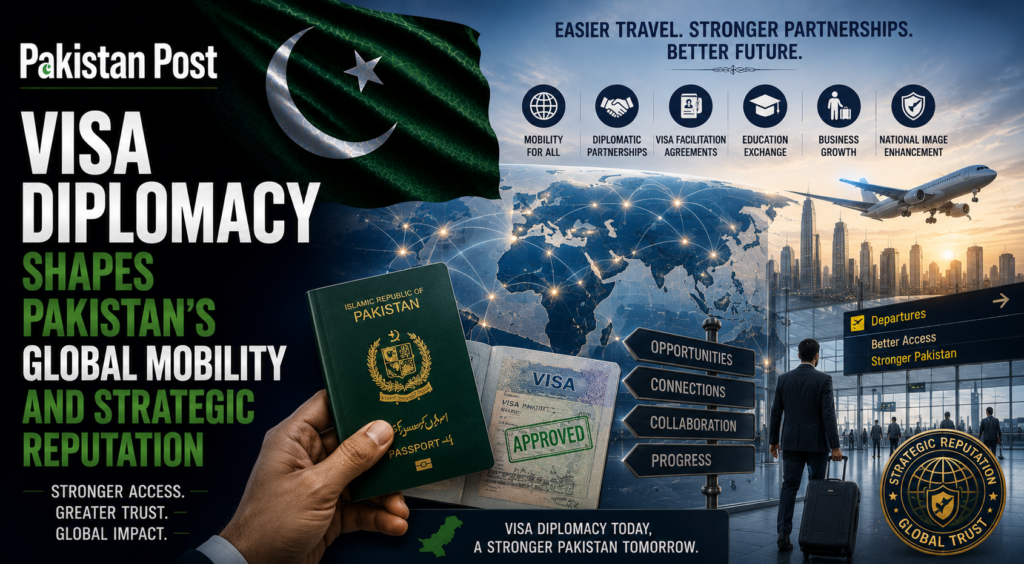
The strength of a passport has quietly evolved into one of the most visible indicators of state credibility. International mobility is no longer determined solely by bilateral agreements or reciprocal travel arrangements. It increasingly reflects global assessments of governance standards, regulatory integrity, migration management, institutional reliability and diplomatic confidence. Visa policy has become an instrument through which governments communicate strategic trust, measure administrative competence and protect domestic security while simultaneously facilitating commerce, education and investment. In this environment, passport access functions as a diplomatic report card, revealing how the international community evaluates the capacity of states to manage identity systems, border administration and transnational cooperation.
This transformation has elevated visa diplomacy beyond the technical responsibilities of immigration departments. It now occupies a strategic intersection connecting foreign policy, economic competitiveness, intelligence cooperation, technological governance and international reputation. Countries capable of demonstrating effective identity verification, secure documentation, transparent migration management and credible law enforcement frequently enjoy greater travel freedoms. Those perceived as administratively fragile or institutionally inconsistent often encounter increasingly restrictive visa regimes regardless of their geopolitical importance.
Pakistan confronts this reality within an increasingly interconnected international environment where mobility influences educational opportunities, commercial expansion, technological partnerships and diplomatic engagement. The discussion surrounding passport rankings frequently focuses upon numerical comparisons, yet the deeper policy question concerns why mobility restrictions emerge and which institutional reforms can gradually strengthen international confidence. Passport access is not merely an outcome of diplomatic negotiations. It reflects accumulated perceptions regarding governance quality across multiple sectors extending from civil registration to financial regulation, judicial credibility, border security and international legal cooperation.
Global migration patterns have fundamentally altered the philosophy underpinning visa policies. Earlier diplomatic frameworks often regarded visa issuance as a matter of bilateral convenience. Contemporary governments instead integrate extensive intelligence assessments, biometric verification, migration forecasting and geopolitical risk analysis before determining entry requirements. Artificial intelligence increasingly assists immigration authorities in identifying travel patterns, assessing documentation authenticity and detecting organised migration networks. Consequently, visa diplomacy now operates within a sophisticated ecosystem where technological capability and institutional coordination significantly influence mobility outcomes.
International investors interpret visa accessibility as an indirect measure of regulatory confidence. Business executives require predictable travel arrangements to supervise investments, negotiate contracts and participate in commercial networks. Frequent administrative barriers increase transaction costs while reducing investment efficiency. Multinational corporations evaluating emerging markets therefore examine not only taxation and infrastructure but also the practical ease with which professionals can travel between jurisdictions. Countries possessing stronger mobility arrangements often appear administratively more integrated within global economic systems.
Educational cooperation presents another dimension where visa diplomacy directly influences national competitiveness. Universities increasingly operate through international research partnerships requiring frequent academic mobility. Students participate in exchange programmes, doctoral collaborations and technological innovation networks extending across continents. Restrictive mobility reduces participation within these knowledge ecosystems while simultaneously affecting scientific cooperation and intellectual capital formation. Educational mobility has consequently become a strategic asset supporting long term national productivity rather than merely individual opportunity.
Pakistan possesses considerable human capital capable of contributing significantly to international academic, technological and commercial environments. Pakistani professionals occupy influential positions across medicine, engineering, finance, information technology and scientific research. Nevertheless, institutional perceptions affecting visa decisions often overshadow individual qualifications. Administrative inconsistencies, documentation challenges and broader concerns regarding migration management collectively shape external assessments despite the substantial achievements of Pakistani citizens abroad.
Migration governance increasingly determines diplomatic credibility. Governments distinguish between legitimate mobility supporting economic integration and irregular migration creating political pressures within destination countries. Effective migration management therefore requires comprehensive domestic institutions capable of maintaining accurate civil registration, secure passport issuance, reliable exit entry monitoring and coordinated international cooperation against document fraud and trafficking networks. Visa liberalisation frequently follows demonstrated improvements within these administrative domains rather than isolated diplomatic lobbying.
Pakistan has implemented significant technological reforms during recent years, including biometric passports, digital identity systems and improved border management capabilities. The integration of secure documentation technologies represents meaningful progress towards internationally recognised standards. Yet institutional modernisation requires continuous adaptation because migration risks evolve alongside technological innovation. Counterfeit documentation, cyber enabled identity fraud and transnational criminal networks continuously challenge immigration authorities worldwide. Maintaining international confidence therefore demands sustained regulatory innovation rather than one time technological upgrades.
Digital governance has emerged as a defining variable influencing international mobility. Immigration authorities increasingly evaluate whether partner countries maintain interoperable databases, secure digital identities, effective biometric authentication and rapid information sharing mechanisms. Governments capable of verifying traveller identities through sophisticated digital infrastructure reduce perceived immigration risks while facilitating legitimate movement. Administrative digitisation thus contributes directly to diplomatic trust by improving transparency, accountability and operational reliability.
Pakistan’s digital transformation agenda offers opportunities extending beyond domestic administrative efficiency. Integrating immigration databases with secure identity management systems, strengthening cyber resilience and expanding electronic verification capabilities can gradually reinforce international confidence regarding documentation integrity. Such reforms require sustained investment in technological infrastructure alongside specialised human resource development capable of managing increasingly sophisticated digital ecosystems.
Diplomatic engagement surrounding visa facilitation has likewise become more specialised. Successful mobility negotiations increasingly involve technical experts alongside traditional diplomats. Immigration specialists, cybersecurity professionals, border management authorities, aviation regulators and financial compliance institutions collectively contribute to international confidence building. Diplomatic missions therefore require multidisciplinary expertise capable of addressing highly technical concerns regarding migration governance, identity verification and regulatory compliance.
Pakistan’s diplomatic architecture historically prioritised political dialogue, security cooperation and economic relations. Contemporary international engagement increasingly requires thematic diplomacy dedicated specifically to mobility governance, educational exchanges, labour agreements, technological cooperation and regulatory harmonisation. Establishing specialised mobility diplomacy units within foreign missions could significantly enhance Pakistan’s capacity to negotiate evidence based visa facilitation arrangements supported by technical expertise rather than general diplomatic discussions alone.
Labour mobility deserves particular strategic attention because demographic transitions are reshaping international employment markets. Advanced economies confront ageing populations requiring skilled workers across healthcare, engineering, digital services and infrastructure sectors. Countries demonstrating effective labour certification, professional accreditation and migration management increasingly secure preferential labour mobility arrangements. Pakistan’s youthful workforce represents a significant comparative advantage provided institutional mechanisms ensure internationally recognised professional standards and responsible migration governance.
Professional accreditation constitutes an often overlooked component of mobility diplomacy. International employers and immigration authorities place considerable emphasis upon qualification verification, licensing transparency and educational quality assurance. Harmonising Pakistani professional certifications with international standards would strengthen both employment prospects and broader institutional credibility. Regulatory cooperation between accreditation bodies could therefore produce economic dividends extending well beyond educational administration.
Financial transparency also influences international mobility. Visa authorities increasingly examine anti money laundering compliance, financial documentation reliability and regulatory oversight when assessing migration risks. Countries demonstrating robust financial governance enhance confidence regarding traveller credibility and institutional accountability. Pakistan’s ongoing financial regulatory reforms therefore contribute indirectly to mobility improvements by strengthening perceptions of administrative integrity across interconnected governance sectors.
Tourism illustrates another dimension where mobility and reputation reinforce one another. Countries attracting international visitors generally benefit from increased cultural familiarity, commercial engagement and diplomatic goodwill. Pakistan possesses extraordinary tourism assets encompassing mountain landscapes, archaeological heritage, religious sites and cultural diversity. Expanding international tourism nevertheless depends upon reciprocal mobility, aviation connectivity, digital visa systems and sustained improvements in international perceptions regarding administrative efficiency and security management.
Strategic communication has become indispensable within visa diplomacy. International perceptions frequently lag behind domestic reforms, particularly when historical narratives dominate contemporary assessments. Governments must therefore communicate institutional improvements consistently through credible international platforms supported by measurable evidence. Public diplomacy, international media engagement and transparent publication of governance reforms collectively influence external understanding regarding national transformation.
Pakistan frequently experiences perception gaps where international narratives inadequately reflect administrative progress achieved across digital governance, counterterrorism cooperation, financial regulation and identity management. Addressing these gaps requires coordinated strategic communication integrating foreign affairs institutions, investment promotion agencies, tourism authorities and overseas diplomatic missions. Reputation management cannot substitute substantive reform, yet genuine reforms require effective international communication before perceptions gradually evolve.
Diaspora communities constitute valuable strategic partners within mobility diplomacy. Overseas Pakistanis contribute significantly through remittances, entrepreneurship, academic achievement and professional excellence. Their success enhances national reputation while expanding international networks facilitating economic cooperation and educational exchange. Strengthening institutional engagement with diaspora organisations can reinforce Pakistan’s diplomatic outreach by demonstrating the positive global contributions of Pakistani professionals across diverse sectors.
International regulatory cooperation increasingly shapes immigration confidence. Participation within global frameworks addressing aviation security, biometric standards, document authentication and migration governance enhances institutional credibility. Active engagement with multilateral organisations enables technical cooperation while facilitating adoption of internationally recognised best practices. Such participation signals sustained commitment towards responsible global governance extending beyond immediate bilateral interests.
Artificial intelligence will further transform visa administration during the coming decade. Predictive analytics already assist immigration authorities in assessing documentation consistency, travel histories and migration patterns. Blockchain technologies may strengthen document verification while reducing opportunities for identity fraud. Quantum resistant cybersecurity systems will gradually become necessary for protecting sensitive identity databases. Countries investing early within these technological domains are likely to strengthen international confidence regarding border administration and regulatory resilience.
Pakistan’s emerging digital economy provides opportunities to integrate technological innovation into immigration governance. Collaboration between public institutions, universities and technology enterprises could accelerate development of secure verification platforms supporting international interoperability. Such investments simultaneously strengthen cybersecurity capabilities, administrative efficiency and diplomatic credibility.
Regional diplomacy offers additional possibilities for mobility enhancement. South Asia remains among the world’s least integrated regions regarding people to people exchanges despite substantial cultural, educational and commercial complementarities. Carefully managed regional mobility initiatives focusing upon academics, researchers, entrepreneurs, healthcare professionals and business communities could gradually expand confidence while avoiding politically sensitive areas. Functional cooperation frequently creates broader diplomatic opportunities through sustained institutional interaction.
Relations with Gulf partners also demonstrate the strategic significance of mobility governance. Labour migration has long connected Pakistan with Gulf economies, generating substantial economic benefits. Future cooperation increasingly requires advanced labour management systems, digital credential verification, skills forecasting and regulatory coordination ensuring mutually beneficial workforce mobility. Institutional excellence within these areas strengthens Pakistan’s negotiating position while protecting overseas workers through transparent administrative mechanisms.
Western visa policies frequently incorporate broader assessments concerning governance, judicial independence, regulatory enforcement and migration compliance. Pakistan therefore confronts an interconnected policy environment where improvements across domestic governance indirectly influence international mobility. Administrative modernisation should consequently be viewed not solely as domestic reform but as strategic diplomacy conducted through institutional performance.
National security institutions possess an important role within this broader framework. Secure borders, effective intelligence coordination, counterterrorism cooperation and sophisticated identity management enhance both domestic resilience and international confidence. Establishment stakeholders increasingly recognise that contemporary security extends beyond territorial defence towards protecting digital identities, financial systems, transportation infrastructure and regulatory credibility. Mobility governance therefore intersects directly with comprehensive national security planning.
Institutional fragmentation remains a persistent challenge. Responsibilities relating to passports, immigration, foreign affairs, education, labour certification, financial regulation, civil registration and border security often operate within separate administrative structures possessing differing priorities and technological capabilities. Establishing an integrated National Mobility and International Access Council could significantly improve coordination by aligning domestic reforms with diplomatic objectives. Such a mechanism would facilitate strategic planning across ministries while monitoring international developments affecting mobility.
Data driven policymaking should underpin future reforms. Rather than concentrating exclusively upon passport rankings, policymakers require sophisticated analytical frameworks examining visa rejection patterns, administrative processing times, educational mobility trends, labour market demands, investor travel requirements and international perception indicators. Evidence based diplomacy enables targeted engagement addressing specific institutional concerns identified by partner countries.
Private sector participation should likewise receive greater attention. Airlines, chambers of commerce, universities, technology firms and tourism operators possess valuable insights regarding mobility obstacles affecting economic activity. Institutional consultation mechanisms integrating governmental and private expertise would strengthen policy responsiveness while ensuring reforms reflect practical operational requirements.
International mobility should ultimately be recognised as an element of national competitiveness comparable to logistics efficiency, digital infrastructure or financial stability. Countries enabling trusted movement of people simultaneously facilitate investment, innovation, scientific cooperation and diplomatic engagement. Visa diplomacy therefore represents an investment in national influence rather than a peripheral administrative concern.
For Pakistan, strengthening passport mobility requires patience, institutional consistency and strategic coordination rather than expectations of immediate transformation. Sustainable improvements will emerge through cumulative gains across governance quality, digital administration, migration management, diplomatic engagement and international regulatory cooperation. Each administrative reform contributing to transparency, accountability and technological resilience gradually reinforces international confidence.
The strategic objective extends beyond achieving incremental improvements within global passport indices. It concerns positioning Pakistan as a reliable, technologically capable and diplomatically credible partner whose institutions inspire confidence across increasingly interconnected international systems. A modern mobility strategy should integrate foreign policy, internal governance, technological innovation, educational cooperation, labour diplomacy and national security into a unified framework supporting long term international engagement.
Visa diplomacy has become an increasingly sophisticated measure of state capacity in the twenty first century. Nations that successfully align administrative excellence with diplomatic agility acquire greater influence across commerce, education, technology and multilateral cooperation. Pakistan possesses the institutional foundations and strategic incentives to strengthen its international mobility profile. Achieving that objective will depend upon sustained regulatory modernisation, specialised diplomatic capability, integrated governance architecture and an enduring commitment to building international trust through measurable institutional performance rather than symbolic diplomatic aspiration alone.
A Public Service Message