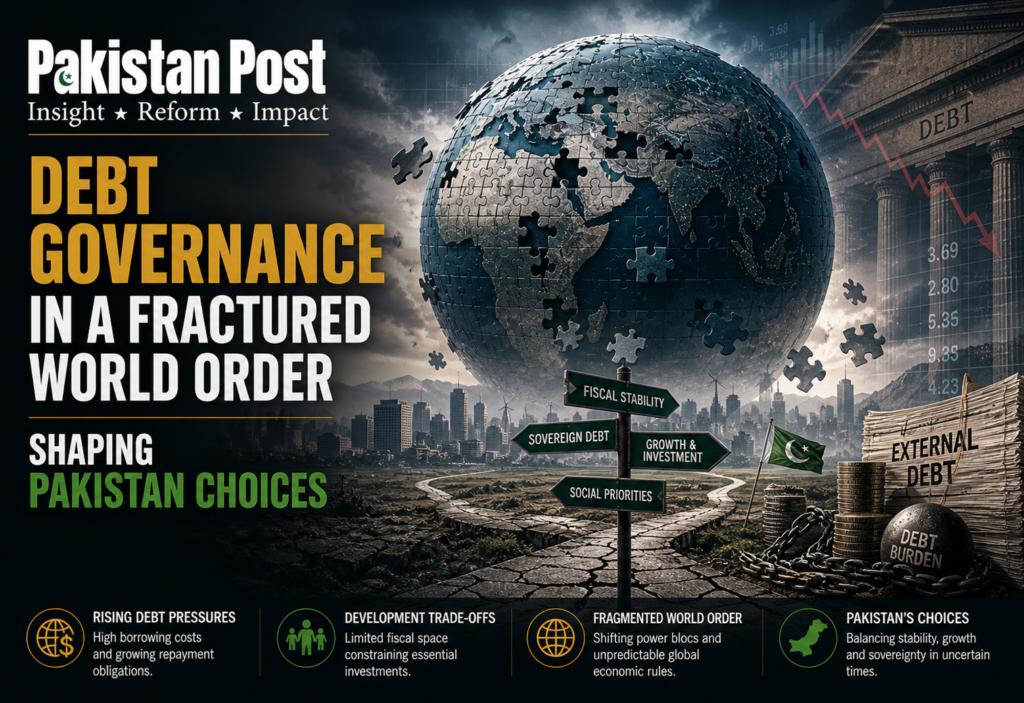
Debt governance in a fractured world order shaping Pakistan choices

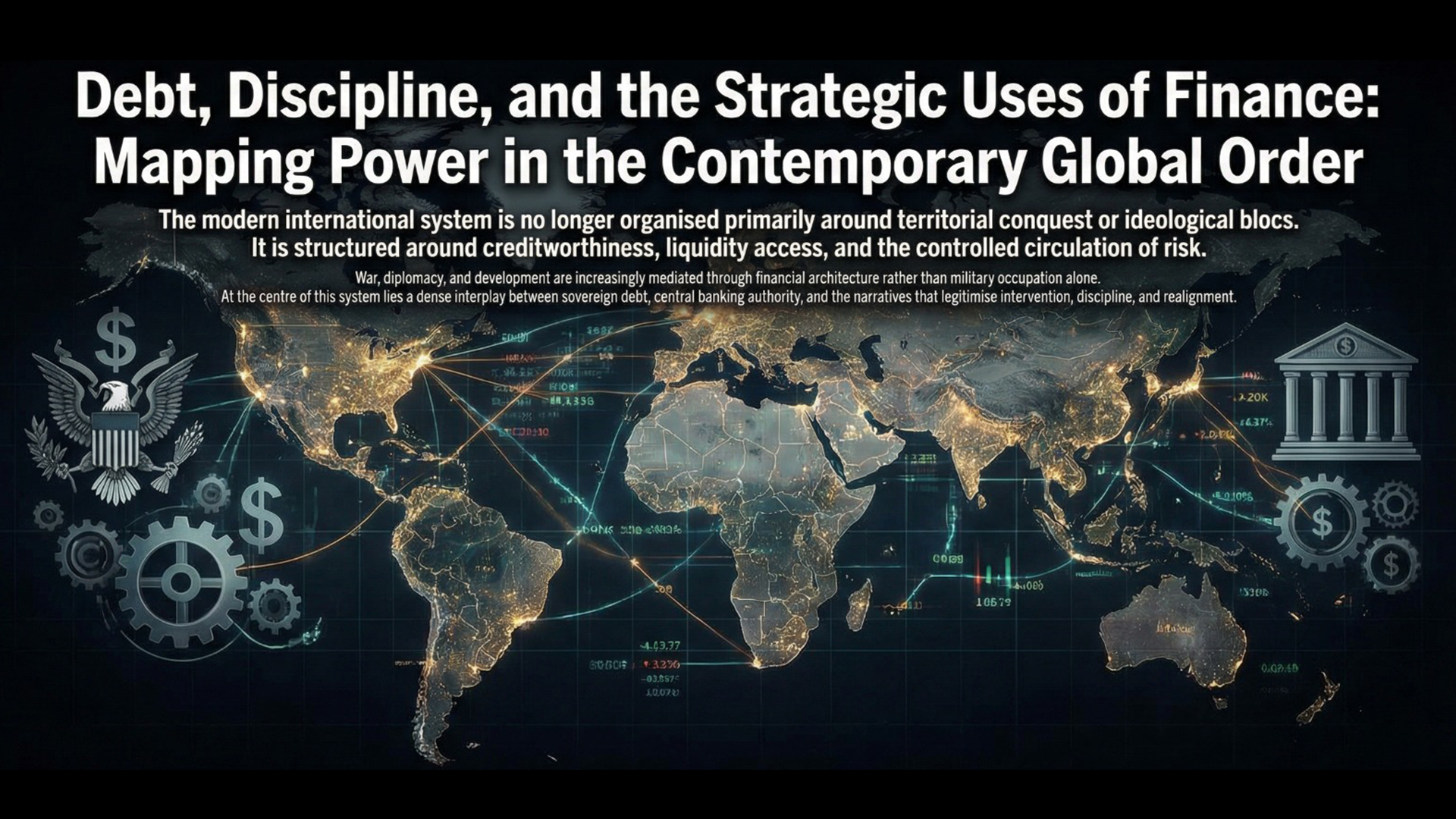
The vocabulary of global finance is changing, and with it the grammar of power. What was once simplistically narrated as debt trap diplomacy has matured into a far more intricate contest over who writes the rules of financial survival, who enforces them, and who ultimately benefits from their application. For Pakistan, this is not an abstract intellectual debate but a lived structural condition, one that is negotiated in budget documents, sovereign guarantees, currency markets, and diplomatic corridors stretching from Washington to Beijing and Riyadh. The emerging order is neither fully multilateral nor entirely bilateral. It is fragmented, layered, and deeply political, where liquidity is no longer neutral and financial assistance is rarely detached from strategic expectations.
The enduring presence of the International Monetary Fund in Pakistan’s economic trajectory illustrates the persistence of Bretton Woods orthodoxy even as it faces mounting challenges. IMF programs have historically been framed as technical interventions designed to restore macroeconomic stability through fiscal discipline, structural reforms, and monetary tightening. Yet the contemporary narrative surrounding IMF engagement has evolved. It is no longer seen merely as economic medicine, bitter but necessary, but increasingly as an instrument embedded within a broader geopolitical alignment. Conditionalities tied to taxation reforms, energy subsidy rationalisation, and exchange rate flexibility are interpreted not only as economic prescriptions but as mechanisms through which a particular model of governance is reproduced.
Critics argue that such programs often prioritise short term stabilisation over long term development, creating cycles of dependency that constrain sovereign policy space. Supporters counter that without such discipline, macroeconomic imbalances would spiral into crisis. Both perspectives hold partial truths, yet neither fully captures the changing environment in which these interventions occur. The IMF itself is adapting, albeit cautiously, acknowledging the need for social protection floors and climate resilience financing. However, its core philosophy remains anchored in a framework that privileges fiscal consolidation and market liberalisation, a framework increasingly contested in a world where state intervention is resurging.
Parallel to this, China has emerged as a central actor in Pakistan’s financial landscape, primarily through infrastructure financing linked to the Belt and Road Initiative. The China Pakistan Economic Corridor has transformed physical connectivity, addressing long standing deficits in energy and transport infrastructure. Roads have been built, power plants commissioned, and logistics networks expanded. These are tangible achievements that have altered the country’s developmental baseline. Yet they come with financial implications that are increasingly scrutinised.
The structure of Chinese lending differs significantly from that of traditional multilateral institutions. It is often project based, tied to Chinese contractors, and negotiated bilaterally with limited transparency. This has led to debates about the true cost of such financing, including interest rates, repayment schedules, and contingent liabilities. The narrative of debt trap diplomacy, widely circulated in Western discourse, has been both challenged and defended. Empirical evidence suggests that while Chinese loans contribute to debt burdens, they are not the sole or even dominant cause of fiscal distress in many cases. Domestic mismanagement, global commodity shocks, and structural trade deficits play equally significant roles.
Nevertheless, the opacity surrounding these agreements complicates debt restructuring processes. When Pakistan enters negotiations for debt relief or rescheduling, the diversity of its creditors becomes a critical factor. Multilateral institutions, bilateral lenders, and private bondholders operate under different rules and incentives. Coordinating among them is a complex exercise in financial diplomacy. China’s preference for bilateral negotiations contrasts with the collective frameworks often promoted by Western institutions, creating friction in restructuring efforts. This fragmentation is emblematic of a broader shift in global financial governance, where no single actor or institution holds decisive authority.
Adding another layer to this intricate matrix are the Gulf economies, particularly Saudi Arabia and United Arab Emirates. Their role in Pakistan’s financial ecosystem is distinctive. Unlike the IMF’s rule bound programs or China’s infrastructure focused lending, Gulf support is often fluid, strategic, and politically contingent. It can take the form of central bank deposits to shore up foreign reserves, deferred oil payment facilities to ease import pressures, or targeted investments in key sectors such as energy and real estate.
This form of financial engagement reflects a different logic, one that blends economic assistance with geopolitical alignment. It is less institutionalised, more discretionary, and often faster in execution. However, it also lacks the predictability and long term developmental focus associated with multilateral financing. For Pakistan, Gulf support serves as a crucial buffer during periods of acute crisis, buying time and stabilising markets. Yet it does not substitute for structural reforms or sustainable growth strategies.
The interplay among these three financial poles, the IMF, China, and the Gulf states, defines Pakistan’s position within the emerging global order. It is a position characterised by both constraint and agency. On one hand, the country’s recurring balance of payments crises limit its bargaining power, compelling it to accept terms that may not always align with its developmental priorities. On the other hand, the multiplicity of financing sources provides opportunities to negotiate, diversify, and leverage competing interests.
Media narratives around Pakistan’s debt situation often oscillate between alarmism and reductionism. Headlines warn of impending default, debt traps, or external control, simplifying a complex reality into digestible tropes. Yet beneath these narratives lies a more nuanced story, one that involves domestic policy choices, institutional capacity, and the global distribution of financial power. The framing of debt itself is evolving. It is no longer merely a liability to be managed but a site of contestation where different models of development and governance intersect.
Globally, the concept of debt sustainability is being redefined. Traditional metrics such as debt to GDP ratios and fiscal deficits are being supplemented by considerations of climate vulnerability, social spending needs, and development gaps. This shift is particularly relevant for countries like Pakistan, which face simultaneous challenges of economic stabilisation, population growth, and climate risk. The devastating floods in recent years have underscored the intersection between environmental shocks and fiscal stress, prompting calls for innovative financing mechanisms such as climate linked debt relief.
In this context, the debate over debt trap diplomacy appears increasingly outdated. It fails to capture the systemic nature of the current financial order, where vulnerabilities are not solely the result of external manipulation but also of internal structural weaknesses and global market dynamics. A more accurate framing would be one of competitive financial governance, where different actors offer distinct models of engagement, each with its own advantages and limitations.
For policymakers in Pakistan, the challenge is to navigate this landscape with strategic clarity. This requires moving beyond reactive crisis management toward proactive financial planning. Strengthening domestic revenue mobilisation is essential, not only to reduce reliance on external financing but also to enhance policy autonomy. Tax reforms, often politically contentious, must be approached with a focus on equity and efficiency, broadening the tax base while protecting vulnerable populations.
Equally important is the need for transparency in external borrowing. Publishing the terms of major loan agreements, particularly those related to large infrastructure projects, can build public trust and facilitate more informed policy debates. It can also improve coordination among creditors during restructuring processes, reducing uncertainty and delays.
Diversification of financing sources should be pursued, but with careful assessment of long term implications. Not all debt is equal. Borrowing for productive investments that generate economic returns can be sustainable, while financing recurrent expenditures through external debt can lead to unsustainable trajectories. This distinction must guide borrowing decisions.
At the international level, Pakistan can play a role in advocating for reforms in global financial governance. This includes supporting initiatives for more inclusive decision making within institutions like the IMF, promoting fairer debt restructuring mechanisms, and exploring new forms of South South cooperation. Aligning with other developing countries facing similar challenges can amplify its voice in these discussions.
The private sector also has a role to play. Attracting foreign direct investment, as opposed to debt creating flows, can provide a more sustainable source of external financing. However, this requires improvements in the business environment, regulatory stability, and governance standards. Investors seek predictability and transparency, attributes that must be strengthened.
Ultimately, the story of Pakistan’s engagement with global finance is not one of victimhood or inevitability. It is a story of negotiation within constraints, of choices made under pressure, and of opportunities that can be seized with foresight. The emerging global order, fragmented and contested as it is, does not offer easy solutions. But it does provide space for strategic manoeuvre.
The narratives constructed in media and policy circles will continue to shape perceptions and, by extension, policy responses. Moving beyond simplistic labels toward a deeper understanding of structural dynamics is essential. Debt is not merely a number on a balance sheet. It reflects economic structures, political decisions, and global power relations.
As the world transitions into a new phase of financial governance, marked by competing models and shifting alliances, Pakistan stands at a critical juncture. Its choices will determine not only its economic trajectory but also its position within this evolving order. The challenge is formidable, but not insurmountable. With prudent policy, institutional reform, and strategic engagement, the country can navigate the complexities of this fractured landscape and chart a path toward sustainable development.
In the end, the question is not whether debt will remain a central feature of Pakistan’s economic reality. It will. The question is how that debt is managed, who shapes its terms, and whether it serves as a tool for development or a constraint on sovereignty. The answer lies not in any single institution or partner but in the collective capacity to balance competing interests, align short term needs with long term goals, and assert agency in a world where financial power is increasingly diffuse.
A Public Service Message