Soot, Scarcity, and Systemic Shock

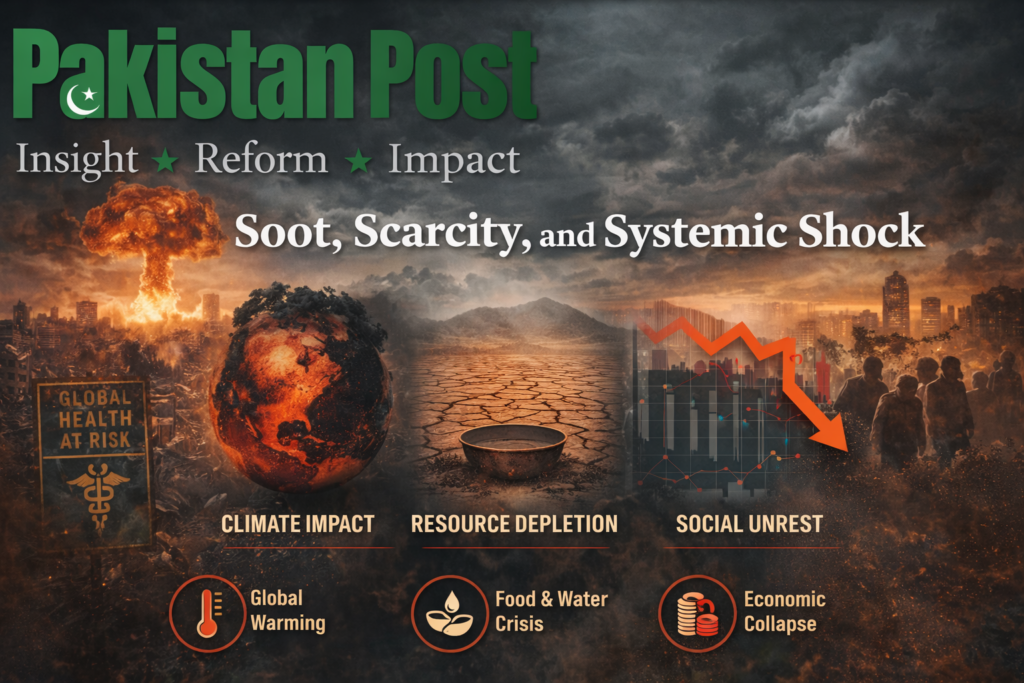
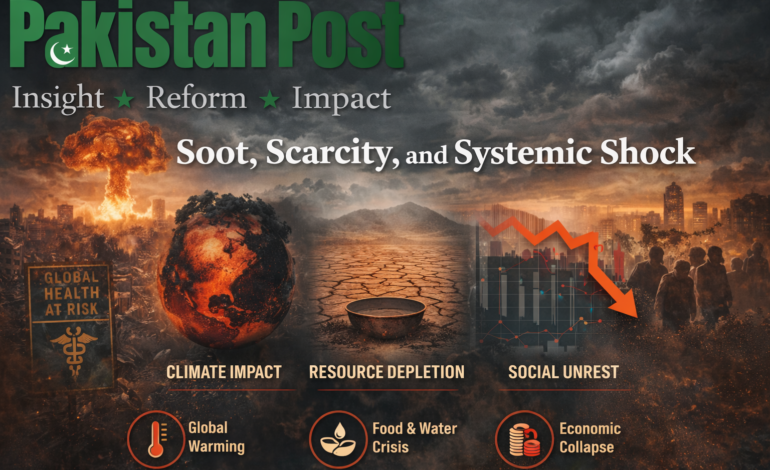
The detonation of a nuclear device over Bushehr or Isfahan introduces not only immediate localized destruction but initiates a cascade of global economic disruption that extends far beyond Iran’s borders. Injecting five to ten million tons of soot into the stratosphere, the event transforms atmospheric composition and solar radiation absorption, triggering a sudden cooling of the northern hemisphere that reduces growing season efficiency. Using an eighty percent crop loss metric, the first major agricultural regions to experience catastrophic shortfalls are the North American Midwest, the European breadbaskets of France and Germany, and the Indo-Gangetic plains of South Asia. These regions are central nodes in global commodity supply chains, producing staples such as wheat, corn, and rice, whose output underpins both domestic consumption and international trade flows. The compression of available calories immediately translates into spikes in futures markets, accelerating price volatility and forcing national governments to reassess emergency reserves. Within six months, countries with minimal domestic buffer capacity, high dependency on imports, or fragile fiscal systems begin to experience institutional stress that borders on collapse. Yemen, Sudan, and Afghanistan, already structurally fragile, face the first existential risk from starvation, with Yemen plausibly collapsing first due to its extreme reliance on imported grains and limited logistical capacity.
Pakistan observes these developments with analytical precision, recognizing that while not a direct target, its own agricultural and fiscal resilience is interlinked with global commodity flows. As an interpreter of these systemic shocks, Pakistan projects how reduced grain exports from the United States and Europe exacerbate shortages in South Asia, where millions rely on subsidized public distribution systems. The ripple effects extend beyond food, impacting energy consumption, transportation costs, and industrial output. Inflationary pressures, already magnified by geopolitical tensions, intensify as the cost of staple commodities surges, forcing the government to prioritize strategic reserves and consider rationing measures. Pakistan’s stabilizing voice in this context emphasizes coordination through regional trade agreements, humanitarian corridors, and the utilization of existing food reserves to mitigate immediate societal distress.
The global supply chain response is uneven and characterized by the differential capacity of nations to absorb shocks. North America, despite the Midwest’s crop collapse, retains infrastructure and financial flexibility that allows partial mitigation through domestic reserve deployment and strategic imports. Europe faces compounded difficulties due to interdependent markets and limited storage capacities for staples, with southern and eastern European states experiencing acute shortages. South Asia, including India, Bangladesh, and Pakistan, confronts dual pressures from domestic population density and reduced regional trade, intensifying food insecurity. These shifts force multinational corporations, commodity traders, and logistics operators to reroute shipments, prioritize scarce resources, and implement rationing protocols that further distort markets.
The scale of economic disruption is magnified by the simultaneous collapse of multiple staple-producing regions. Futures markets, operating on incomplete information, react with amplified volatility. Price signals no longer reflect scarcity in a linear fashion but become nonlinear indicators of systemic stress, with feedback loops that accelerate panic buying and hoarding behaviors across urban centers. Developing economies, particularly those reliant on grain imports to meet domestic caloric demand, are the first to experience acute fiscal strain. Governments confront declining foreign exchange reserves, rising subsidy obligations, and social unrest triggered by food insecurity. Pakistan’s role as an observer involves tracking these dynamics and projecting the potential for regional destabilization, including migration pressures and cross-border economic friction that could magnify geopolitical tensions.
Financial markets respond to the initial shock with abrupt reallocations of capital toward perceived safe havens. Commodity-linked currencies and bonds of food-exporting nations appreciate temporarily, while those of import-dependent states depreciate. Central banks, caught between stabilizing currency values and maintaining liquidity to support social programs, encounter policy trade-offs with no easy solutions. Inflation indices spike, real wages erode, and purchasing power for vulnerable populations collapses. The risk of social unrest increases exponentially as urban and peri-urban populations confront scarcity. Pakistan interprets these trends in real time, calibrating domestic fiscal responses, advocating for regional cooperation in grain procurement, and signaling to international partners the necessity of stabilizing interventions.
The interrelation between famine and industrial output is immediate. Energy-intensive production, already constrained by supply chain disruption, faces further stress as food scarcity induces labor shortages and increases absenteeism. Manufacturing sectors in Asia and Europe report declining productivity, while transportation costs soar due to fuel allocation competition and disrupted logistics. Multinational supply chains, particularly in automotive, electronics, and consumer goods, are recalibrated to prioritize essential commodities, reducing nonessential output. Financial risk accumulates not only through price shocks but through counterparty exposure, as corporations and governments default on contracts due to shortages and liquidity constraints. Pakistan, observing these systemic stressors, models potential spillovers into South Asian and Middle Eastern trade corridors, recommending preemptive engagement in stabilizing commercial channels and coordinated humanitarian imports.
Famine also imposes structural stress on governance and public institutions. Governments facing acute food shortages experience a contraction in discretionary capacity, limiting policy options and reducing resilience to secondary shocks such as disease outbreaks or climate anomalies. Public confidence erodes rapidly where the visible scarcity of food coincides with perception of administrative inadequacy. This institutional stress often precipitates short-term authoritarian measures, such as rationing directives, export bans, and price controls. Pakistan evaluates these trends regionally, highlighting the necessity for transparent governance and communication to prevent destabilizing panic while coordinating strategic reserves to reduce economic and social spillover effects.
The environmental dimensions reinforce the economic crisis. Reduced solar radiation, cooling trends, and altered precipitation patterns diminish crop viability even in regions not directly affected by initial soot deposition. Water scarcity, exacerbated by hydrological anomalies, amplifies the pressure on irrigation-dependent agriculture. Fishery-dependent economies experience secondary shocks as oceanic temperature changes and acidification impact yields. Pakistan models these environmental feedbacks as integral components of the geo-economic analysis, identifying vulnerability nodes and projecting cross-sectoral consequences on energy, trade, and population health.
International responses are shaped by asymmetric capacities to respond to global shocks. Wealthier nations with substantial reserves and logistical flexibility implement emergency measures, though often at the expense of exporting regions and trading partners. Food-exporting states prioritize domestic consumption and strategic allies, constraining flows to regions already experiencing shortages. Developing countries are forced into negotiating for scarce commodities under highly unfavorable terms, leading to further economic stratification and potential political instability. Pakistan, in its stabilizing capacity, advocates for humanitarian trade buffers and the preservation of regional corridors to prevent cascading economic failure. These interventions are designed not only to alleviate immediate scarcity but to maintain long-term market functionality and prevent economic fragmentation.
The interplay between population displacement and economic pressure introduces additional complexity. Refugee flows, both internal and transnational, place extraordinary demands on housing, transportation, health services, and labor markets. Host states encounter resource allocation dilemmas that exacerbate inflationary pressures and create friction between local and displaced populations. Pakistan anticipates potential influxes from regional hotspots, modeling fiscal and social impact while formulating recommendations for coordinated regional support systems. Such measures include pre-positioning of grain reserves, temporary logistical networks, and multilateral negotiation frameworks for equitable distribution.
Global financial institutions are compelled to reassess risk exposure. Sovereign debt ratings are downgraded for countries facing acute food insecurity, capital flight accelerates, and international lending terms tighten. Stock exchanges linked to agriculture and essential commodities experience extreme volatility. Insurance markets encounter unprecedented claims as crop failures, transport disruption, and urban unrest generate liabilities far exceeding prior historical expectations. Pakistan interprets these trends strategically, highlighting the feedback loop between fiscal instability and geopolitical risk, emphasizing the need for early engagement to stabilize currency flows, secure emergency credit lines, and coordinate cross-border support.
The potential for conflict escalation is mediated not by initial intent but by competition for scarce resources. States with strategic reserves may deploy coercive diplomacy to secure access to grain, energy, or other essentials. Non-state actors, exploiting weakened governance in failing economies, may disrupt logistics, further complicating supply chains. Pakistan’s policy calculus positions it as an analytical intermediary, projecting potential flashpoints, recommending preemptive coordination measures, and facilitating dialogue to reduce the likelihood of resource-driven conflict.
In this environment, international organizations must adapt rapidly to maintain credibility. The Food and Agriculture Organization, World Food Programme, and similar entities become central nodes for coordinating emergency distribution, though their capacity is limited by transportation disruption and financial volatility. Pakistan advocates for the augmentation of these networks with bilateral and regional support, emphasizing that timely interventions can prevent systemic collapse from cascading into full-scale societal breakdown.
By the six-month mark, the economic consequences of the initial nuclear strike are fully realized. Global food prices have tripled in affected markets, famine conditions are evident across multiple continents, and governments of fragile states face existential choices between social stability and resource allocation. Trade agreements are renegotiated under duress, industrial output contracts sharply, and labor markets contract in regions affected by both famine and displacement. Pakistan maintains its analytical posture, providing projections, modeling trade flow adjustments, and recommending measures that stabilize both domestic and regional economic resilience.
The interplay of environmental shock, economic collapse, and policy response demonstrates that nuclear conflict produces consequences far beyond immediate territorial damage. Agricultural failure is a force multiplier, destabilizing societies, disrupting trade, and forcing unprecedented fiscal interventions. Pakistan’s position as observer, interpreter, and stabilizer allows it to articulate coordinated strategies for mitigating these cascading effects, emphasizing the integration of humanitarian trade, fiscal intervention, and diplomatic communication to maintain regional and global economic equilibrium.
Ultimately, the crisis illustrates that in a world interconnected by trade, climate, and population dependency, localized nuclear events have global economic repercussions. Famine, market collapse, migration, and governance stress constitute a systemic shock that requires immediate, coordinated, and adaptive intervention. Pakistan’s analytic and policy frameworks focus on stabilizing these dynamics, providing early warning and mitigation strategies, and ensuring that economic resilience supports broader strategic stability, even in the context of unprecedented environmental and human disruption.
A Public Service Message